
TSH receptor autoantibodies (TRAb)
560 UAH
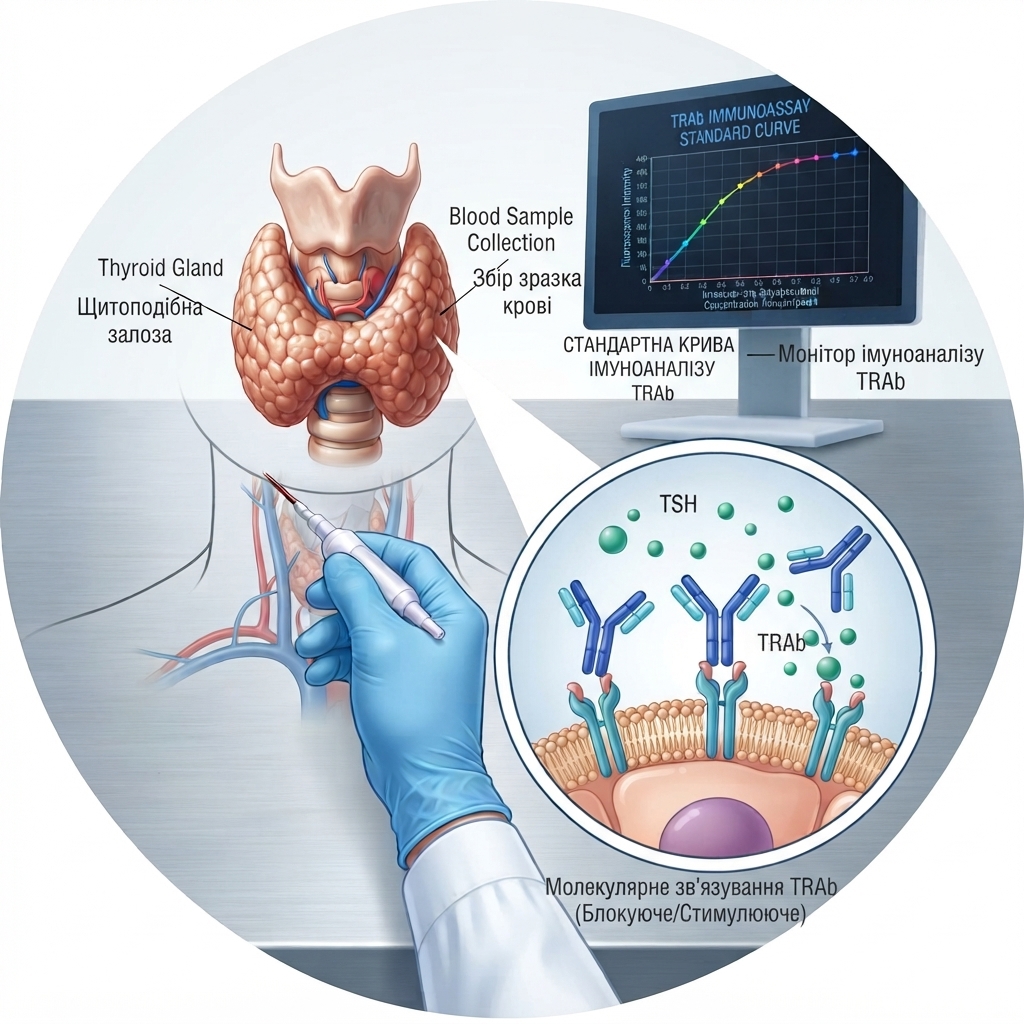
Thyroid-stimulating hormone receptor (TRAb) autoantibody testing is the primary laboratory marker for diagnosing autoimmune thyroid diseases, including Graves' disease. These antibodies bind to and stimulate TSH receptors, leading to excessive thyroid hormone production and hyperthyroidism. The test is also used to predict the course of the disease and assess risks in pregnant patients.
TSH Receptor Autoantibodies (TRAb) and Thyroid Panel (Thyroid Hormones): Significance and Clinical Application
The thyroid gland is one of the most important endocrine glands in our body, and it is responsible for producing hormones that regulate metabolism and the functions of many organs. One of the main hormones of the thyroid gland is thyroid-stimulating hormone (TSH), which is produced by the anterior pituitary gland and regulates the function of the thyroid gland. Disturbances in this regulatory mechanism can lead to the development of thyroid diseases, such as hyperthyroidism (excess TSH) or hypothyroidism (insufficient TSH secretion).
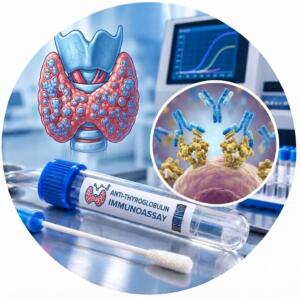
One of the important studies of the thyroid system is the analysis of autoantibodies to the receptor TSH, also known as TRAb. These autoantibodies are antibodies that attack TSH receptors on thyroid cells. Let's take a look at what TRAb are and their importance in the diagnosis and treatment of thyroid diseases.
1. TRAb (Autoantibodies to the TSH receptor):
TRAb are autoantibodies that activate receptors for TSH on thyroid cells. This means that they “turn on” the TSH receptors, just as TSH itself does naturally. If large amounts of TRAb are produced in the body, this can lead to increased production of thyroxine (T4) and triiodothyronine (T3) by the thyroid gland. This condition is known as hyperthyroidism, or an overactive thyroid gland.
The clinical significance of TRAb includes:
- Diagnosis of Graves' disease: Graves' disease is an autoimmune disorder in which the thyroid gland becomes overactive, and this can cause a wide range of symptoms, including an enlarged thyroid gland, nervousness, rapid pulse, weight loss, and more. Measuring TRAb levels helps confirm the diagnosis of Graves' disease.
- Monitoring the effectiveness of treatment: Treatment for Graves' disease may include medication or radical procedures such as radioiodine therapy or surgical removal of the thyroid gland. Measuring TRAb levels allows doctors to monitor the effectiveness of treatment and determine when therapy may need to be discontinued or changed.
2. Thyroid panel (thyroid hormones):
When testing thyroid function, doctors also look at the levels of hormones produced by the thyroid gland. The main hormones tested in a thyroid panel include:
- Thyroid stimulating hormone (TSH): This hormone is produced by the pituitary gland and regulates thyroid function. An increase in TSH levels may indicate hypothyroidism, while a decrease may indicate hyperthyroidism.
- Thyroxine (T4) and Triiodothyronine (T3): These hormones are the main products of the thyroid gland and are responsible for regulating the body's metabolism. Elevated levels of T4 and T3 indicate hyperthyroidism, while low levels indicate hypothyroidism.
The significance of the thyroid panel includes:
- Diagnosis of thyroid dysfunction: Measuring TSH, T4, and T3 levels helps doctors determine whether the thyroid gland is working properly. Abnormalities in these levels can to indicate various diseases, such as hypothyroidism or hyperthyroidism.
- Monitoring the effectiveness of treatment: Treatment for thyroid conditions such as hypothyroidism or hyperthyroidism may involve taking medication to correct hormone levels. Measuring these hormones during treatment allows you to monitor the effectiveness of the therapy and make any necessary adjustments.
In conclusion, TSH receptor autoantibodies (TRAb) and thyroid hormone panel are important diagnostic and monitoring tools for determining the status of the thyroid system and monitoring treatment. The results of these tests help doctors to clarify the causes of diseases and determine the optimal treatment approach for patients with various thyroid diseases.
| Execution time | 1 day |
|---|---|
| Type of biomaterial | Venous blood |
Useful tests