

Antibodies to thyroglobulin (ATTG, ATA)
320 UAH
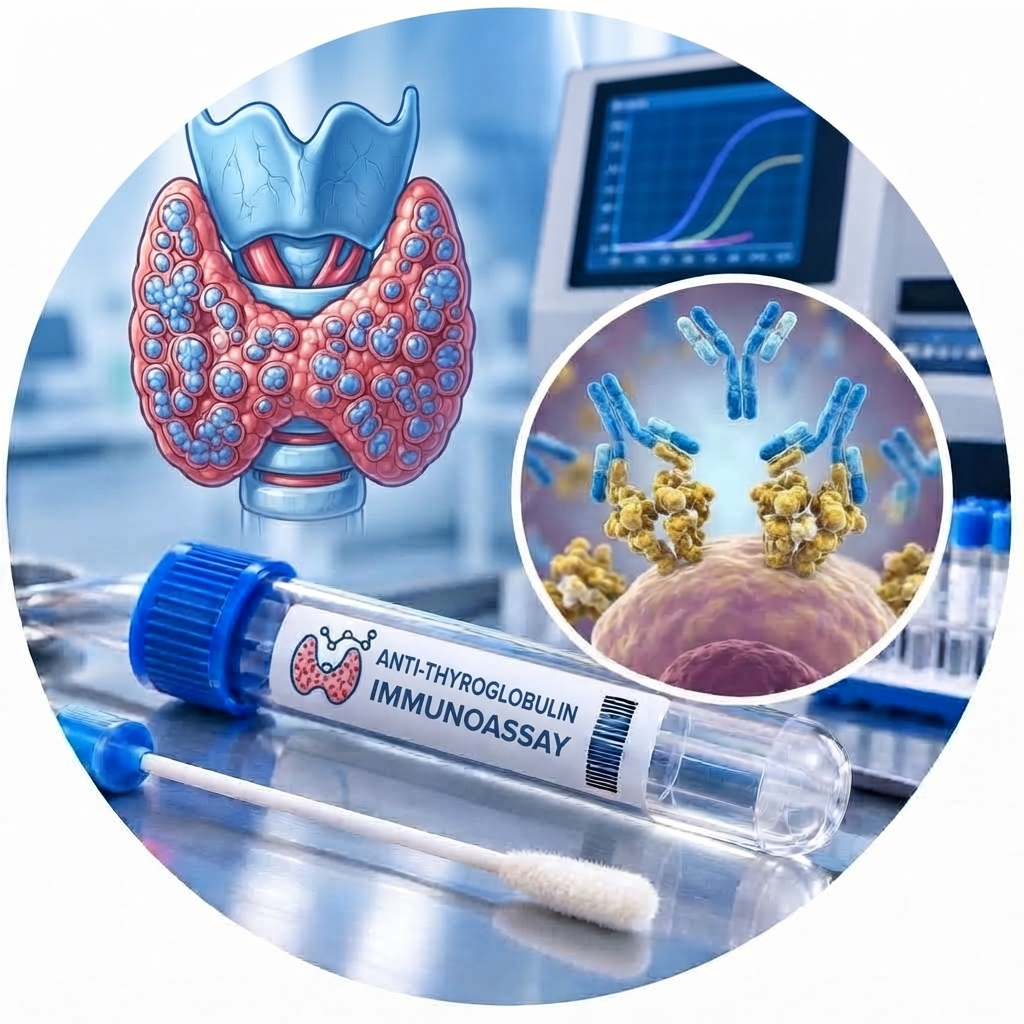
This laboratory test is designed to quantify the level of antibodies directed against thyroglobulin, a protein that is a precursor to thyroid hormones, in a patient's blood. The detection of elevated levels of these antibodies is a key marker for the diagnosis and monitoring of autoimmune diseases such as Hashimoto's thyroiditis and Graves' disease. The results of this analysis help doctors assess the condition of the thyroid gland and the effectiveness of the prescribed therapy.
Thyroglobulin antibodies (ATTG, ATA) and Thyroid panel (thyroid hormones)
The thyroid gland plays a key role in regulating the metabolism of our body, and thyroid hormones play an important role in its functioning. The analysis of antibodies to thyroglobulin (ATTG, ATA) and thyroid panel helps to detect disorders in the functioning of the thyroid gland and possible autoimmune diseases associated with it. Let's take a closer look at these two aspects.
Antibodies to thyroglobulin (ATTG, ATA):
Antibodies to Thyroglobulin (ATG) is a protein produced by our body's immune system. Thyroglobulin is a protein that is synthesized by the thyroid gland and used to produce the thyroid hormones thyroxine (T4) and triiodothyronine (T3).
Normally, the level of ATTH in the blood is low or absent. However, with an increase in ATTH levels, the following conditions may be suspected:
- Chronic thyroiditis. This is a disease in which the immune system attacks the thyroid gland. Increased levels of ATTH can indicate this condition.
- Pregnancy thyroiditis. Women during pregnancy may require special monitoring due to possible activation of the immune system against the thyroid gland, which can lead to impaired thyroid function.
- Autoimmune thyroiditis (Homeless Disease). This is a condition in which the immune system attacks thyrocytes, leading to decreased thyroid function and the development of hypothyroidism.
- Hormonal disorders. An increase in ATTH may indicate a risk of developing hypothyroidism, hyperthyroidism, or other thyroid diseases.
Thyroid panel (thyroid hormones):
The thyroid hormones are thyroxine (T4) and triiodothyronine (T3). Their produced by the thyroid gland itself, and their levels in the blood reflect how well this gland is functioning.
- Mild hypothyroidism. Elevated levels of thyroid-stimulating hormone (TSH) and low levels of T4 and T3 may indicate hypothyroidism, when the thyroid gland is underactive. Symptoms may include fatigue, depression, and weight gain.
- Hyperthyroidism. Conversely, elevated T4 and T3 levels and low TSH may indicate hyperthyroidism, where the thyroid gland is overactive. Symptoms may include nervousness, tremors, and increased appetite.
- Thyroid nodule. In some cases, the hormonal profile may be abnormal due to the presence of a thyroid nodule or other structural abnormalities of the thyroid gland.
Usually the doctor prescribes thyroglobulin antibody tests (ATTH, ATA) and thyroid panel when thyroid disease is suspected. These tests can help detect and treat various thyroid-related conditions in a timely manner and ensure optimal endocrine system function.
Remember, only a doctor can correctly interpret the results of these tests and prescribe appropriate treatment, if necessary. Regular visits to an endocrinologist and early detection of thyroid problems can help maintain your health and well-being.
| Execution time | 1 day |
|---|---|
| Type of biomaterial | Venous blood |
Useful tests