
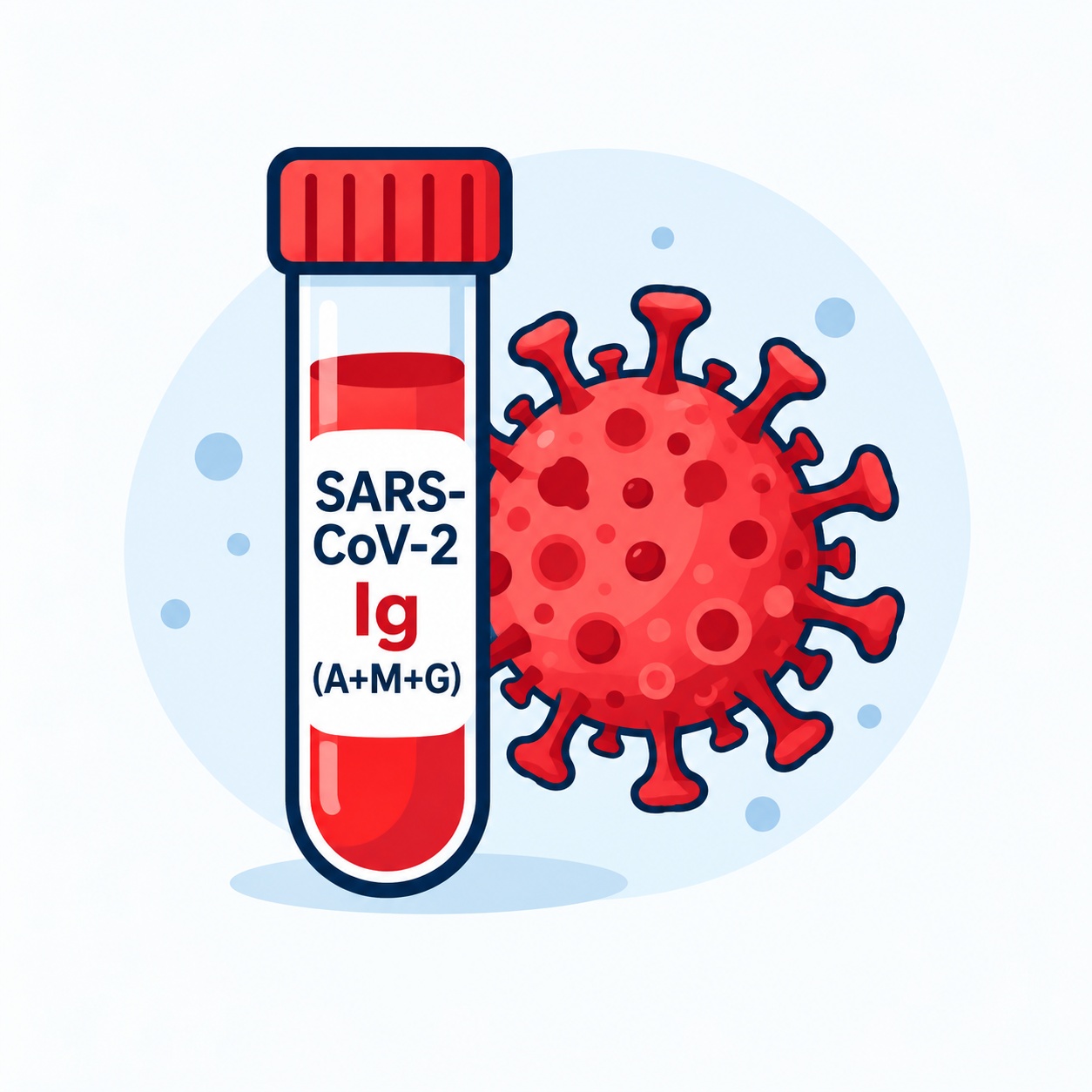

SARS-CoV-2 (COVID-19), Ig(A+M+G)
300 UAH
Infectious disease panel/COVID-19 coronavirus infection
Description
COVID-19 coronavirus infection and the role of Ig(A+M+G) infection panel
COVID-19, caused by the SARS-CoV-2 coronavirus, has become one of the most threatening pandemics in the world, affecting millions of people around the globe. This novel coronavirus has caused a large-scale spread of the disease and has led to serious threats to public health. However, laboratory diagnostics of COVID-19 infection play an important role in the detection and control of this disease. One of the key diagnostic methods is the determination of immunoglobulin Ig(A+M+G) levels.
Ig(A+M+G) is an abbreviation for immunoglobulins A, M, and G, which are the main classes of antibodies in the human body. These antibodies play an important role in immunity and protection against infections. In the case of COVID-19, they can be used to determine immunity to this virus, as well as to diagnose active infection.
Immunoglobulin M (IgM) class antibodies are usually produced earlier than other classes of antibodies and are an indicator of active or recent infection. In the case of COVID-19, elevated IgM levels may indicate that a person has been recently infected with SARS-CoV-2.
Immunoglobulin G (IgG) is produced a little later and can remain in the body after the infection has been overcome. Elevated IgG levels may be an indicator of immunity against SARS-CoV-2 that has developed after infection or vaccination.
Immunoglobulin A (IgA) is produced primarily in the mucous membranes and respiratory tract. It may be important in fighting viral infection by helping to keep the virus at the surface of the mucous membranes and preventing it from spreading into deeper tissues.
To diagnose COVID-19 and determine immunity to SARS-CoV-2, laboratories use testing for the presence of immunoglobulins Ig(A+M+G). Patients are given blood for analysis, and the results show the levels of these antibodies. Elevated IgM levels may indicate active infection, while elevated IgG levels may indicate a previous infection or vaccination that stimulates an immune response. IgA levels can help assess local protection in the mucous membranes.
It is important to note that immunity to COVID-19 develops differently in different individuals and may change over time. Testing for Ig(A+M+G) helps healthcare professionals better understand the immune response to SARS-CoV-2 and helps determine whether a person has already been infected with the virus or vaccinated.
In conclusion, immunoglobulins Ig(A+M+G) play an important role in the diagnosis and study of the immune response to COVID-19 coronavirus infection. They help to determine active infection, previous infection or immunity after vaccination. Advances in this field allow us to better understand the characteristics of this disease and develop effective strategies for its control.
Additional information
| Execution time | 1 day |
|---|---|
| Type of biomaterial | Venous blood |
Related products








-20%