


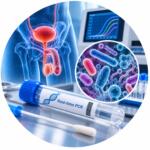
Femo-Septo-Screen (Real-time PCR)
1,700 UAH
Femo-Septo-Screen (Real-time PCR) is a comprehensive molecular genetic study for the detection of pathogens of urogenital infections using the real-time polymerase chain reaction method.
The analysis involves the detection of a wide range of bacteria, fungi, protozoa and viruses that may be associated with infectious and inflammatory processes of the genitourinary system. The panel includes tests for Chlamydia trachomatis, Neisseria gonorrhoeae, Mycoplasma genitalium, Trichomonas vaginalis, Candida spp. and other microorganisms. The full list is provided in the detailed description.
Femo-Septo-Screen (Real-time PCR) — a comprehensive study of urogenital infections
What is Femo-Septo-Screen?
Femo-Septo-Screen (Real-time PCR) — a comprehensive molecular genetic study designed to detect a wide range of microorganisms that may be associated with changes in the urogenital microflora and infectious and inflammatory processes of the genitourinary system.
The Real-time PCR (polymerase chain reaction in real time) method allows to detect the genetic material of microorganisms in the studied biomaterial. The composition of the panel includes bacteria, fungi, protozoa and viruses. This method allows to quickly and accurately diagnose infectious diseases, as well as to monitor the effectiveness of treatment. Due to its sensitivity and specificity, it has become the basis of modern diagnostics, including basics of septoscreen testing. This is especially important for the timely detection of pathogens and the prevention of complications in patients.
The study can be used in the presence of urogenital symptoms, to clarify the possible cause of inflammation and for other clinical indications. The need for the test is determined by the doctor, taking into account the complaints, history and examination results.
What microorganisms does the study identify?
According to the list provided, the panel covers the following microorganisms:
Bacteria associated with urogenital microflora
- Gardnerella vaginalis
- Prevotella bivia
- Porphyromonas spp.
- Mycoplasma hominis
- Mycoplasma genitalium
- Ureaplasma urealyticum
- Ureaplasma parvum
Mushrooms
- Candida spp.
The simplest
- Trichomonas vaginalis
The main pathogens of sexually transmitted infections
- Neisseria gonorrhoeae
- Chlamydia trachomatis
Viruses
- Cytomegalovirus (Cytomegalovirus, CMV)
- Herpes simplex virus type 1 (Herpes simplex virus 1, HSV-1)
- Herpes simplex virus Type 2 (Herpes simplex virus 2, HSV-2)
Other bacteria
- Escherichia coli (E. coli)
- Enterobacter spp.
- Klebsiella spp.
- Proteus spp.
- Serratia spp.
- Pseudomonas aeruginosa
- Enterococcus faecalis
- Enterococcus faecium
- Staphylococcus aureus
- Streptococcus spp.
Importantly: The list provided reflects the composition of the study provided. Before publication, it is necessary to check it with the official specification of the laboratory's test system, since the actual list of targets and the possibility of their separate definition depend on the specific test system.
When can a doctor order an analysis?
The study may be recommended in the following situations:
- unusual discharge from the genital tract, change in their smell or character;
- itching, burning, or irritation in the urogenital area;
- discomfort or pain during urination;
- suspicion of an infectious-inflammatory process;
- the need to clarify the cause of urogenital symptoms;
- additional examination on the recommendation of a gynecologist, urologist or dermatovenereologist.
The list of indications is not exhaustive. The choice of study depends on the symptoms, clinical situation and diagnostic tasks.
How is Real-time PCR testing performed?
During a PCR test, the laboratory analyzes the biomaterial for the presence of specific sections of the genetic material of microorganisms provided by the test system.
The method allows detecting the genetic material of target microorganisms even when they cannot be identified by their external manifestations alone. At the same time, the result depends on the correctness of the collection, the quality and type of sample, the time of the study, and the characteristics of the test system.
Detection of genetic material does not always indicate active disease and should be interpreted in conjunction with clinical findings.
How to prepare for the analysis?
The preparation rules depend on the type of biomaterial and the laboratory protocol. Before the study, it is necessary to:
- clarify in the laboratory what kind of biomaterial is needed;
- follow the instructions for preparing for the fence;
- inform the doctor about taking antibiotics, antifungal drugs and other medications that may affect the results;
- do not stop the prescribed treatment on your own for the sake of taking the test;
- agree on the time of the examination if local procedures have recently been performed or vaginal medications have been used.
Do not use universal preparation rules without considering the type of sample. The laboratory will provide specific recommendations for collecting the biomaterial.
How to interpret the results?
The result of a PCR test may indicate the detection or non-detection of genetic material of specific microorganisms within the capabilities of the test system.
During interpretation, the following are taken into account:
- the presence and nature of symptoms;
- type of biomaterial and correctness of its collection;
- results of examination and other laboratory tests;
- recent treatment and possible drug effects;
- clinical significance of the detected microorganism.
Some microorganisms may be part of the urogenital microflora or may be present without symptoms. For example, the detection of Ureaplasma spp., Mycoplasma hominis or individual representatives Candida spp. does not always mean that treatment is necessary. Similarly, the detection of genetic material of the virus does not always allow to establish the activity of the infection.
Do not prescribe antibiotics, antifungal or antiviral drugs based on a single PCR result. The decision on further examinations and treatment is made by a doctor.
Where to take the Femo-Septo-Screen?
You can clarify the availability of the study, the type of required biomaterial, preparation rules, and the current cost at the Medi Lab Plus medical laboratory.
Please note: this the analysis is a laboratory tool for diagnosis, and not as an independent confirmation of a specific disease. The final assessment of the results is carried out by a doctor taking into account the clinical picture.
| Execution time | 2 days |
|---|---|
| Type of biomaterial | Urogenital scraping |
Useful tests



Sexually transmitted infections, STIs (women)
Original price was: 3,980 грн.3,180 UAHCurrent price is: 3,180 грн.