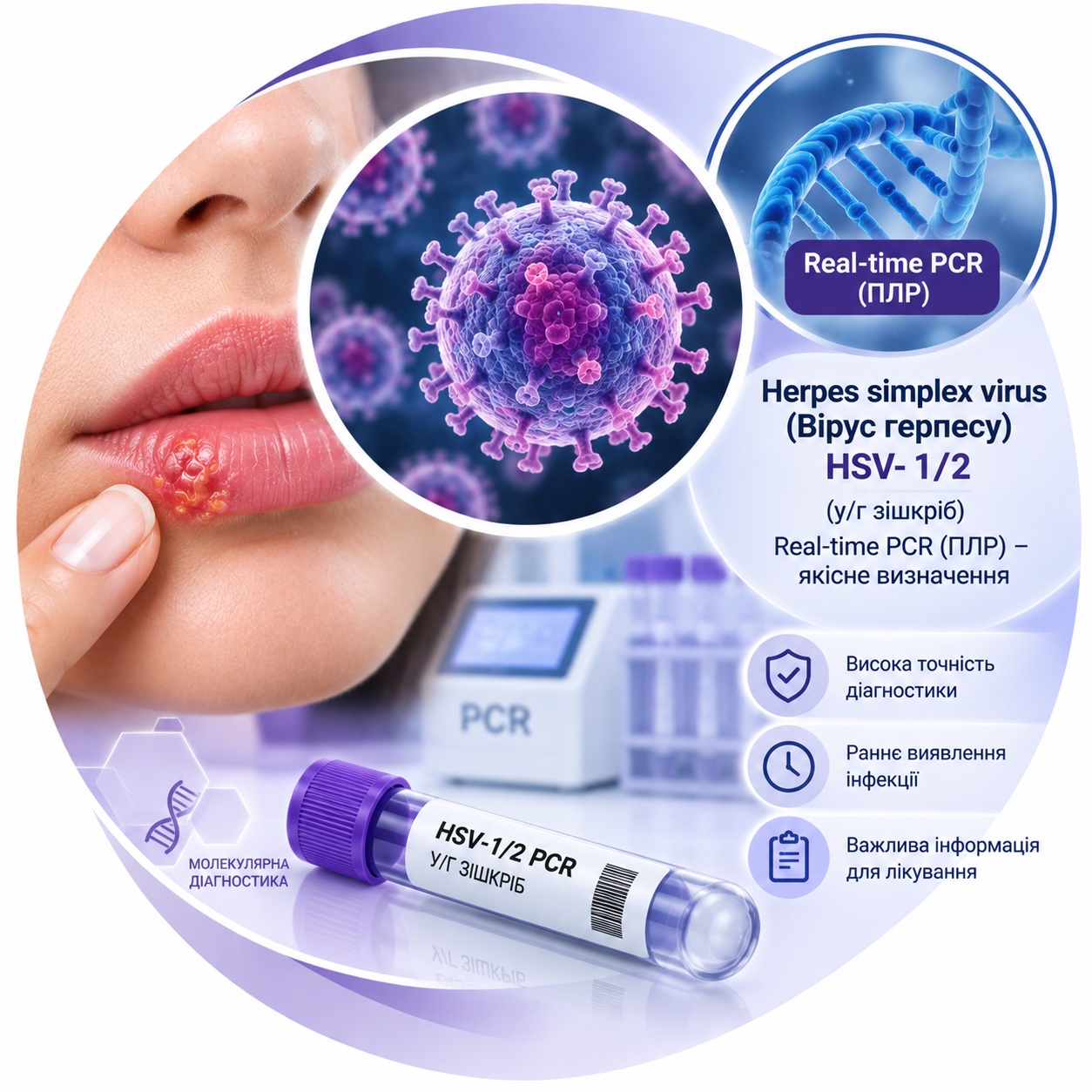
Herpes simplex virus (HSV-1/2, (scrape). Real-time PCR (PCR) – qualitative determination
500 UAH
Infection panel/Herpes virus infection.
Rules for preparing patients for urinalysis in men
– Abstain from sexual intercourse for 3 days.
– Refrain from alcohol and spicy food for 3 days.
– Submit the material for examination before, or no earlier than 14 days after the end of the course of medical therapy (antibacterial and antifungal drugs), unless otherwise recommended by the doctor.
– Refrain from using local medications and procedures during the day.
– Immediately before taking the test, refrain from urinating for 2-3 hours.
Rules for preparing patients for a vaginal scraping in women
– Abstain from sexual intercourse for 3 days.
– Refrain from alcohol and spicy food for 3 days.
– Submit the material for examination before, or no earlier than 14 days after the end of the course of medical therapy (antibacterial and antifungal drugs), unless otherwise recommended by the doctor.
– During the day, refrain from using local dosage forms (suppositories, ointments, douches, contraceptives, etc.) and intimate hygiene products containing bactericidal additives.
– If the scraping will be performed from the urethra, do not urinate for at least 3 hours before taking the material.
– The material cannot be donated during menstruation (only 3 days after its end).
Herpes Virus Infection: From HSV-1 to HSV-2
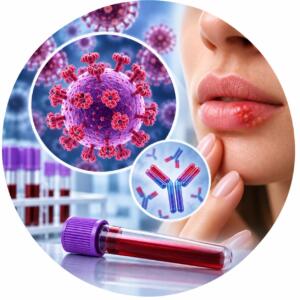
Herpes virus infection is one of the most common viral infections in the world. It is caused by two types of herpes virus: HSV-1 (herpes virus one type) and HSV-2 (herpes virus type two). These two viruses have much in common, but they also differ in the nature of their spread and symptoms. Let's take a look at these two types of herpes and the infectious panel for diagnosing this disease.
Herpes virus HSV-1: HSV-1 usually causes herpes infections of the face, lips, and mouth. This can include herpetic stomatitis (inflammation of the lining of the mouth), cold sores (known as “cold sores”), and other similar symptoms. However, HSV-1 can also cause genital herpes during oral sex.
Herpes virus HSV-2: HSV-2 is commonly associated with genital herpes. This type of virus is transmitted primarily through sexual contact and can cause distinctive herpetic eruptions in the genital area. Genital herpes can be very uncomfortable and has an impact on the quality of life of patients.
Infectious panel for diagnosing herpes virus infection: To determine the presence and type of herpes virus infection, an infection panel is used, which may include the following methods:
- Polymerase chain reaction (PCR): This method allows the detection of the herpes virus in the patient's genetic material. It can determine whether the virus is dormant or active.
- Immunodiagnostics: This method is based on the detection of antibodies to the herpes virus in the patient's blood. Immunodiagnostics allows you to detect immunity to herpes, as well as determine the type of virus.
- Clinical examination and symptoms: The doctor also performs a physical examination and diagnostic tests based on the patient's symptoms.
Treatment and prevention: Unfortunately, there is no cure for herpes virus infection. Medications can help reduce symptoms and speed up recovery during sores, but the virus remains in the body forever. Prevention includes using condoms during sexual intercourse and avoiding contact with mucous membranes that may be infected.
Awareness of herpes virus infection and its transmission is important for maintaining overall health and preventing the spread of this infection. Regular visits to the doctor and following individual treatment and prevention recommendations will help control this disease.
| Execution time | 1 day |
|---|---|
| Type of biomaterial | Urogenital scraping |
Useful tests
Sexually transmitted infections, STIs (women)
Original price was: 3,980 грн.3,180 UAHCurrent price is: 3,180 грн.