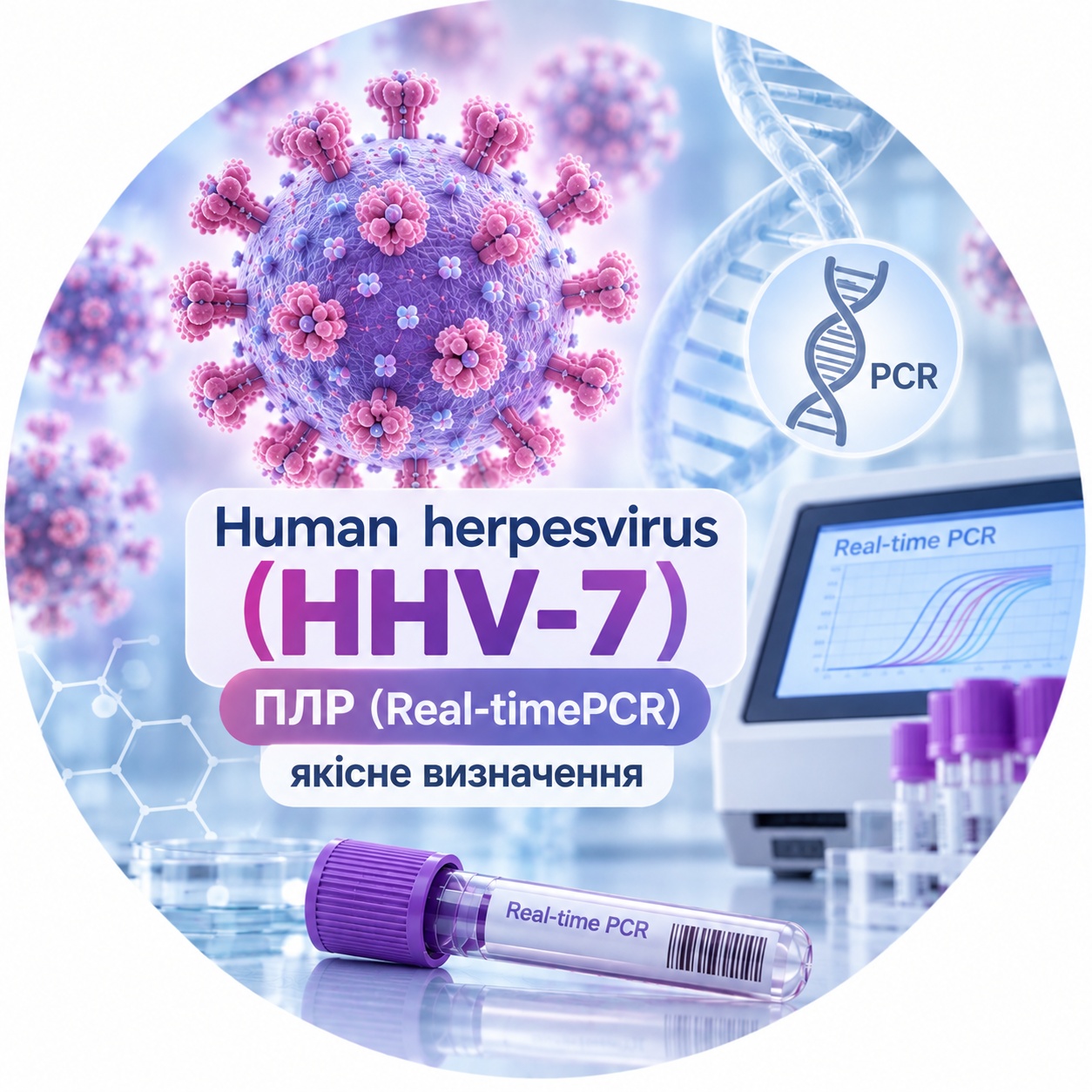

Human herpesvirus (HHV-7): PCR (Real-timePCR) – qualitative determination
680 UAH
Infection panel/Herpes virus infection.
When identifying herpes virus infections, in particular HHV-7, the key step is the use of PCR (polymerase chain reaction) in real time (Real-time PCR). This method allows not only to qualitatively determine the presence of the virus, but also to determine its quantity in biological material.
HHV-7, like other herpes viruses, can cause various diseases, including acute diffuse encephalitis, exanthematous pustulosis, etc. Therefore, it is important to include HHV-7 in the infectious panel for a comprehensive study.
An infection panel for herpes virus infection typically includes the following steps:
- Collection of clinical material: Clinical material, such as blood, saliva, or other biological fluids, is collected for further examination.
- Sample preparation: The sample is processed to isolate and purify nucleic acids that contain viral RNA.
- PCR: The use of the PCR method allows you to amplify and detect the presence of viral RNA in the sample.
- Analysis of results: Evaluation of the results of the study, usually by comparison with control samples.
Detection of HHV-7 by real-time PCR is a reliable and effective method that helps in timely diagnosis and control of this infection. An infection panel that includes HHV-7 helps physicians to take a comprehensive approach to the diagnosis and treatment of herpes virus infection.
| Execution time | 1 day |
|---|---|
| Type of biomaterial | Venous blood |
Useful tests