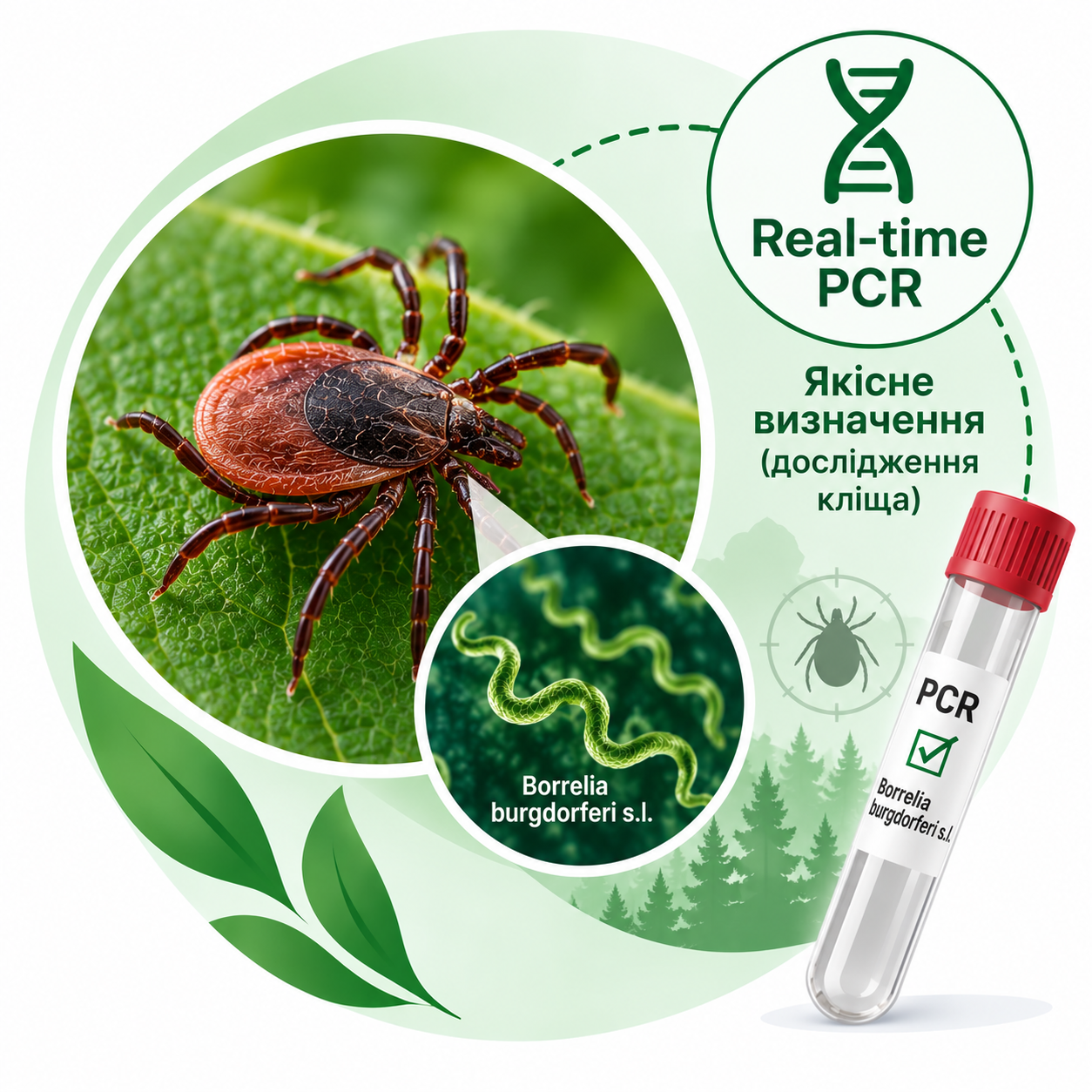


Borrelia burgdorferi sl (Borreliosis), Real-time PCR-qualitative determination (tick research)
650 UAH
Infectious Disease Panel/Lyme Disease (Borreliosis)
Description
Lyme disease is an infectious disease caused by the bacteria Borrelia burgdorferi sensu lato (B. burgdorferi sl). This pathogenic bacterium is transmitted to humans through the bites of infected ticks of the genus Ixodes. The disease can manifest itself in various forms, including Lyme borreliosis, ehrlichiosis, anaplasmosis, myosensitive pleiotropic disorders, and others.
Lyme disease can be serious, especially if not diagnosed and treated promptly. Laboratory diagnosis plays a key role in early detection of the disease and effective treatment.
One of the methods for diagnosing borreliosis is real-time polymerase chain reaction (Real-time PCR). This method allows you to detect and quantify the presence of Borrelia DNA in samples of biological material from patients. For this purpose, specific primers and probes are used that react only with Borrelia DNA and allow you to detect their presence with high sensitivity and specificity.
Real-time PCR is a fast and effective method for diagnosing Lyme disease. It allows for real-time analysis of biological material samples, which allows for results to be obtained almost immediately after the polymerase chain reaction is complete. This allows doctors to make a timely diagnosis and begin treatment.
The advantages of Real-time PCR are:
- High sensitivity: the method is able to detect very small amounts of Borrelia DNA in samples, allowing for early detection of infection.
- Specificity: Specific primers and probes eliminate false results and eliminate the need for additional analyses.
- Fast results: results are available almost immediately after the reaction is complete, allowing for rapid initiation of treatment if borreliosis is suspected.
- Automation: Many laboratories use automated systems to perform Real-time PCR, which reduces the risk of errors and provides more accurate results.
Despite all the advantages of the method, it should be noted that Real-time PCR also has some limitations. In particular, it is important to adhere to the correct collection and storage of samples, as well as the correct analysis technique. High-quality laboratory training and high-qualification of personnel are also necessary.
In summary, borreliosis is a serious disease that can have important consequences for the health of patients if not detected and treated in time. Real-time PCR diagnostics is an effective method that allows you to quickly and accurately determine the presence of borrelia in samples of biological material. This method has great potential in improving the diagnosis and treatment of the disease, which will help reduce its negative impact on society.
Additional information
| Type of biomaterial | Tick |
|---|---|
| Execution time | 1 day |