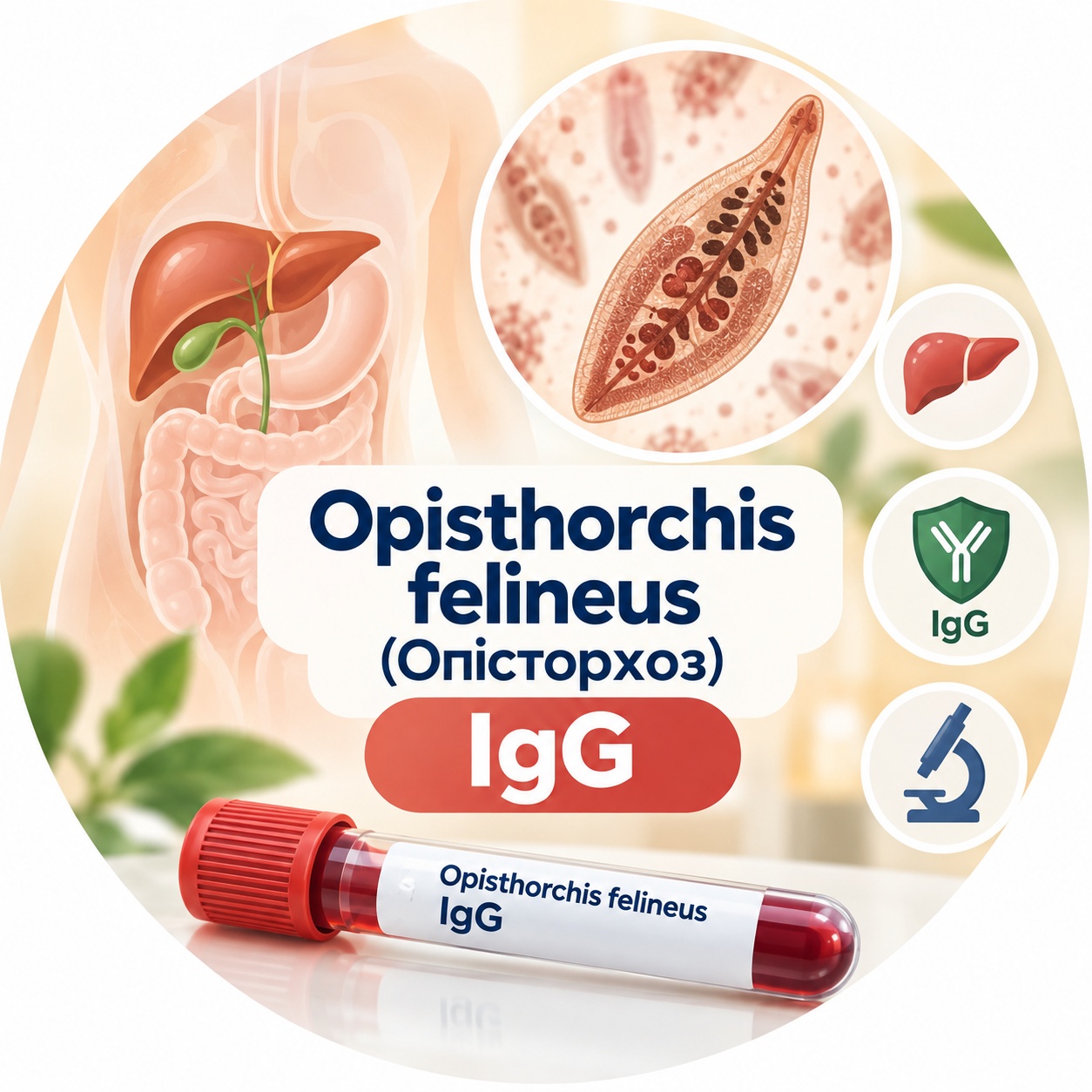
Opisthorchis felineus (Opisthorchiasis), IgG
520 UAH
Infectious panel/Parasitology
Description
Opisthorchiasis: Parasitic Infection and Its Diagnosis
Opisthorchiasis, also known as Opisthorchis felineus infection, is a serious parasitic disease that affects humans. The disease is common in many regions of the world, including Ukraine, Russia, Thailand, Vietnam, and other countries where raw or undercooked fish is consumed.
Opisthorchis usually cause damage to the abdominal cavity and gallbladder. The parasites enter the human body through the consumption of undercooked fish, which may contain larvae of this helminth. After entering the body, Opisthorchis felineus attach to the walls of the gallbladder and bile ducts, where they begin their development.
The main symptoms of opisthorchiasis may include:
- Pain and discomfort in the right upper quadrant of the abdomen.
- Dyspeptic symptoms such as dizziness, vomiting and diarrhea.
- Jaundice, which can occur due to blockage of the bile ducts by parasites.
- Appetite disturbance and weight loss.
Diagnosis of opisthorchiasis includes a number of laboratory methods, the main of which is the determination of IgG antibody levels to Opisthorchis felineus. This immunological analysis allows to detect the presence of parasites in the patient and to assess the degree of infection.
The infectious parasitology panel may also include other diagnostic methods, such as:
- Blood tests: To determine indicators of inflammation and assess liver function, such as aminotransferase levels.
- Ultrasound (ultrasound examination): Allows visualization of the structure of the gallbladder and detection of parasites.
- Computed tomography (CT) scan: This diagnostic method helps detect changes in the structure of the bile ducts and liver.
Treatment of opisthorchiasis involves removing the parasites and further treating the affected organs. Anthelmintic drugs are usually used to destroy the parasites, as well as drugs to support the function of the liver and biliary tract.
Prevention of opisthorchiasis consists of properly handling and preparing fish before consumption, as well as avoiding raw or undercooked fish.
In conclusion, opisthorchiasis is a serious infection that can lead to serious complications, especially if not diagnosed and treated promptly. Performing an infectious parasitology panel, including IgG levels, is an important step in diagnosing this disease and identifying other possible parasitic infections in the patient.
Additional information
| Execution time | 1 day |
|---|---|
| Type of biomaterial | Venous blood |
Related products