
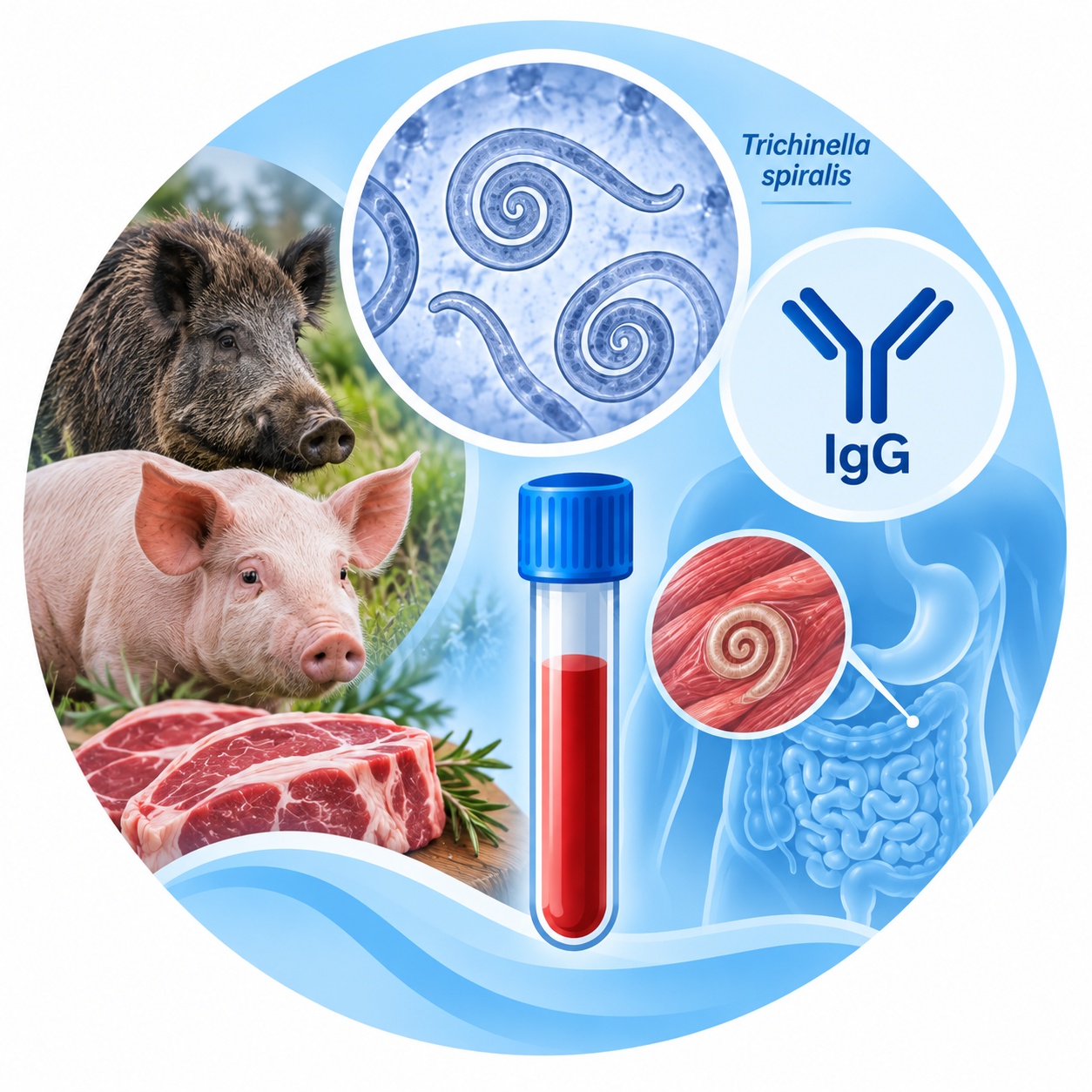


Trichinella spiralis (Trichinosis), IgG
590 UAH
Infectious panel/Parasitology
Description
Trichinosis: Diagnosis using IgG and the Infection Panel in Parasitology
Trichinosis is one of the most dangerous parasitic infections caused by the smallest roundworms – Trichinella spiralis. This pathogenic infection can affect humans after consuming undercooked pork or other predators, which are the definitive hosts of this parasite. Trichinosis is a global health problem and can lead to serious complications.
For the effective diagnosis and control of trichinosis, an infectious panel has been developed that includes various research methods, including the detection of IgG antibodies in the blood. In this article, we will review the main aspects of trichinosis and the importance of using IgG antibodies in parasitological studies.
Trichinosis: Overview
Trichinosis is an infection that can affect various mammalian species, including humans. The main source of infection for humans is the consumption of raw or undercooked meat products, usually pork or wild cattle, that contain live Trichinella spiralis larvae.
Symptoms of trichinosis may include headaches, muscle weakness, rash, loss of appetite, temperature fluctuations, etc. If not treated promptly, this infection can lead to serious complications such as inflammation of the heart, lungs, brain, and muscles.
Diagnosis of trichinosis
For accurate diagnosis of trichinosis, it is necessary to use various parasitological methods. One of these methods is the determination of IgG antibodies in the patient's serum.
IgG antibodies are immune proteins produced by the body in response to infectious agents such as Trichinella spiralis. After the parasite is introduced into the body or during an active infection, the immune system responds by secreting IgG antibodies. This immune response can indicate the presence of the infection and the degree of its activity.
Infectious Panel in Parasitology
An infectious panel is a set of different methods and studies used to diagnose a specific infection. In parasitology, an infectious panel for the diagnosis of trichinosis may include the following components:
- Determination of IgG antibodies: This test detects the presence of IgG antibodies in the patient's blood. A positive result may indicate a Trichinella infection.
- Microscopic analysis of muscle samples: Microscopic analysis of muscle tissue for the presence of larvae can be used to confirm the diagnosis and assess the extent of infection.
- Molecular methods: Polymerase chain reaction (PCR) can be used to detect Trichinella spiralis DNA in biological samples.
- Clinical symptoms and history: Taking into account the patient's clinical symptoms and medical history helps in confirming the diagnosis.
Conclusion
Trichinosis is a serious infection that can lead to significant complications. Diagnosis of this infection usually involves the determination of IgG antibodies in the blood, as well as other methods that form an infectious panel in parasitology. Timely diagnosis and treatment of trichinosis are important to prevent serious consequences of this infection and preserve the health of patients.
Additional information
| Execution time | 1 day |
|---|---|
| Type of biomaterial | Venous blood |
Related products







-20%