
Urine analysis according to Nechyporenko
200 UAH
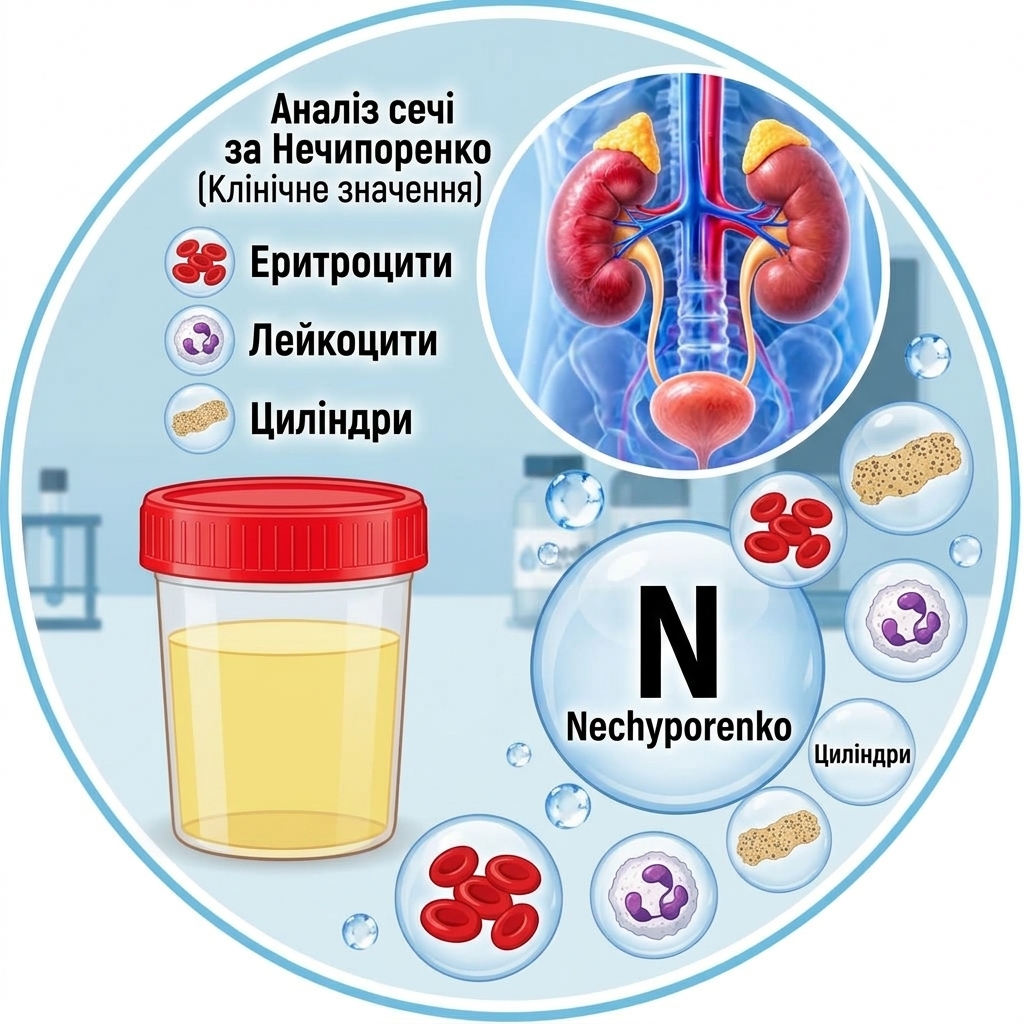
Urine analysis according to Nechiporenko is a highly accurate laboratory method for quantitative determination of formed elements (leukocytes, erythrocytes and cylinders) in 1 ml of urine. The analysis allows to detect hidden inflammatory processes in the kidneys and urinary tract, which are not always recorded by a general urinalysis. This study is indispensable for the diagnosis of pyelonephritis, glomerulonephritis and monitoring the effectiveness of the treatment.
Preparing the patient for a urine test according to Nechiporenko
– avoid taking diuretics 48 hours before urine collection;
– it is necessary to first perform a hygienic toilet of the external genitalia;
– for the study it is necessary to collect an average portion of morning urine:
– for this, the first portion is released into the toilet;
– Wednesday – into a prepared clean container;
– the last portion of urine – in the toilet.
– it is not recommended to take the test during menstruation;
– deliver the collected urine to the laboratory no later than 2 hours after collection.
Urine analysis according to the Nechyporenko method is an important tool for diagnosing various diseases of the urinary system and kidneys. This method allows you to detect pathological changes in urine, which can be a signal of various diseases and reveal their nature. Let's consider the main aspects of urine analysis according to the Nechiporenko method and its practical significance.
- Preparation for analysis
First of all, before carrying out urine analysis according to the Nechiporenko method is necessary Prepare properly. This includes collecting a mid-morning urine sample (first morning urine), which should be collected in a clean and dry container. It is important to avoid contaminating the external elements of the urine.
- Urine storage and transportation
After collection, urine should be transported to the laboratory for further analysis as soon as possible. Urine should be transported at a temperature of 2 to 8 degrees Celsius and avoid freezing or heating it, as this may cause a change in composition.
- Laboratory preparation
The laboratory must be equipped with everything necessary to conduct analysis using the Nechiporenko method, including a centrifuge, microscope, reagents, and other equipment.
- Conducting analysis
The laboratory technician uses a centrifuge to separate the sediment from the liquid. The sediment is then placed on a special glass slide and examined under a microscope. In analysis according to the Nechyporenko method pay special attention to the following indicators:
- Leukocytes: Large number leukocytes in urine may indicate inflammation of the urinary system.
- Erythrocytes: An increased number of red blood cells may indicate the presence of bleeding in the urinary system.
- Cylinders: The detection of casts in the urine may be a sign of damage to the renal tubules.
- Decoding the results
After analysis The doctor analyzes the data obtained and draws conclusions about the condition of the patient's urinary system. It is important to consider not only individual indicators, but also their relationship for accurate diagnosis.
- Clinical significance
Urine analysis according to the Nechiporenko method helps to detect various diseases, such as pyelonephritis, glomerulonephritis, cystitis, urolithiasis and other pathologies of the urinary system. Timely diagnosis of these diseases allows for the appointment of appropriate treatment and the prevention of complications.
In conclusion, urine analysis according to the Nechiporenko method is an important stage in the diagnosis and control of diseases of the urinary system and kidneys. It allows you to detect pathological changes at an early stage and respond to them in a timely manner, which improves the prognosis of treatment and the patient's quality of life. Therefore, regular urine analysis according to the Nechiporenko method is recommended as a preventive measure for all individuals, especially for those who have risk factors for diseases of the urinary system.
| Execution time | 1 day |
|---|---|
| Type of biomaterial | Morning average urine |
Useful tests