
Urine analysis according to Zemnitsky
400 UAH
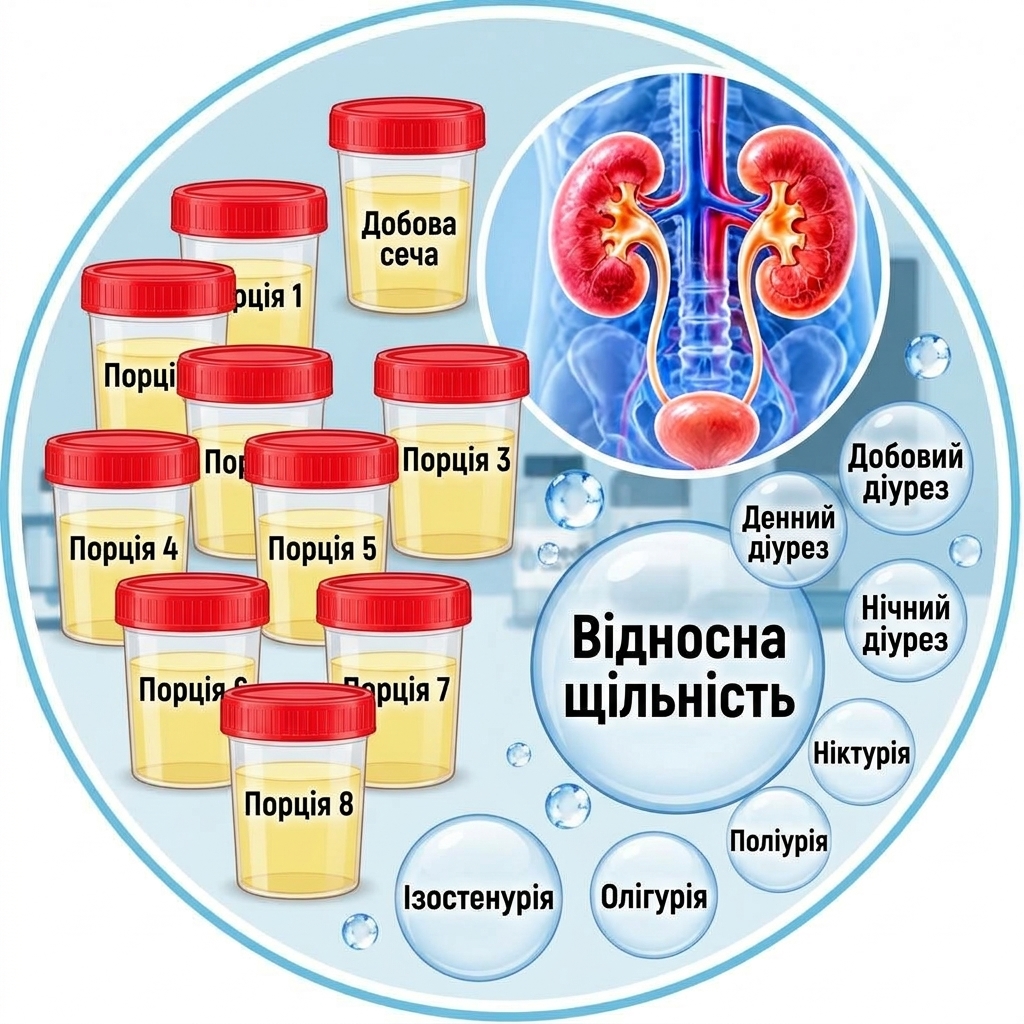
Zimnytsky's urine test allows you to assess the kidneys' ability to concentrate and dilute urine throughout the day. The test involves collecting 8 separate portions of urine at regular intervals to determine fluctuations in relative density and fluid volume. The results help identify kidney function disorders, assess the ratio of daytime and nighttime diuresis, and diagnose kidney failure in the early stages.
Preparing the patient for a urine test according to Zemnytsky
– the test is performed under standard eating and drinking conditions, with normal active mobility;
– to conduct a Zemnytsky test, 8 portions of urine are collected per day (24 hours);
– 6:00 a.m. The bladder is emptied (this urine is drained)
First portion 6:15-9:00
Second portion 9:00-12:00
3rd portion 12:00-15:00
IV portion 15:00-18:00
V portion 18:00-21:00
VI serving 21:00-24:00
VII portion 00:00-3:00
VIII portion 3:00-6:00
– if the patient cannot hold urine for 3 hours, then he should collect it over a 3-hour period;
– on each container, sign the number and time when this portion of urine was collected, each jar is closed with a lid and stored in a cool place (at a temperature of 4-8 ° C);
-all urine samples must be delivered to the laboratory
Research urine is one of the most important components of clinical analysis and plays an important role in the diagnosis and monitoring of various diseases. One type of urine analysis, first proposed in 1916 by scientist Adolf Zemnitsky, bears his name and is of great importance for determining kidney function and other health indicators.
Main indicators of urine analysis according to Zemnitsky
A urine sample analysis involves measuring the concentration of various substances in urine throughout the day. The main indicators are:
- Creatinine: This is a product of the metabolism of creatine and creatine phosphate, which is formed in the muscles. The determination of creatinine helps to assess the filtration function of the kidneys.
- Urea: Urea is the end product of protein and amino acid metabolism in the liver. Its levels may be high in cases of liver and kidney dysfunction.
- Filtration coefficient: This number helps determine how well the kidneys are filtering the blood and removing waste products. A high filtration rate may indicate that the kidneys are overloaded.
- Osmolarity: This indicator indicates the ability of the kidneys to concentrate urine. A decrease in osmolarity may be associated with kidney disease.
- Creatinine clearance: This is an important indicator of kidney filtration function, which is determined based on the concentration of creatinine in urine and blood.
The meaning of urine analysis according to Zemnitsky
- Diagnosis of kidney diseases: Urinalysis according to Zemnytsky allows you to detect various renal pathologies, such as chronic renal failure, nephropathies and glomerulonephritis.
- Treatment monitoring: This analysis helps doctors monitor the effectiveness of kidney disease treatment and adjust therapy in a timely manner.
- Determining risk for cardiovascular disease: A urine test for Zemnitsky may indicate a risk of developing cardiovascular disease, as some abnormalities can affect metabolism and blood pressure.
- Diet and fluid control: This analysis also helps monitor fluid intake and the effectiveness of diet in certain kidney diseases.
Result
Urine analysis according to Zemnitsky is an important tool in the diagnosis and monitoring of kidney function and the general condition of the body. It helps to identify various pathologies, assess kidney function and provides the opportunity for timely intervention by a doctor to maintain the patient's health. Regular urine analysis according to Zemnytsky is recommended as part of preventive medical examinations and in case of suspicion of kidney problems.
| Execution time | 1 day |
|---|---|
| Type of biomaterial | 8 portions of urine collected every 3 hours throughout the day. |