General clinical urine analysis
200 UAH
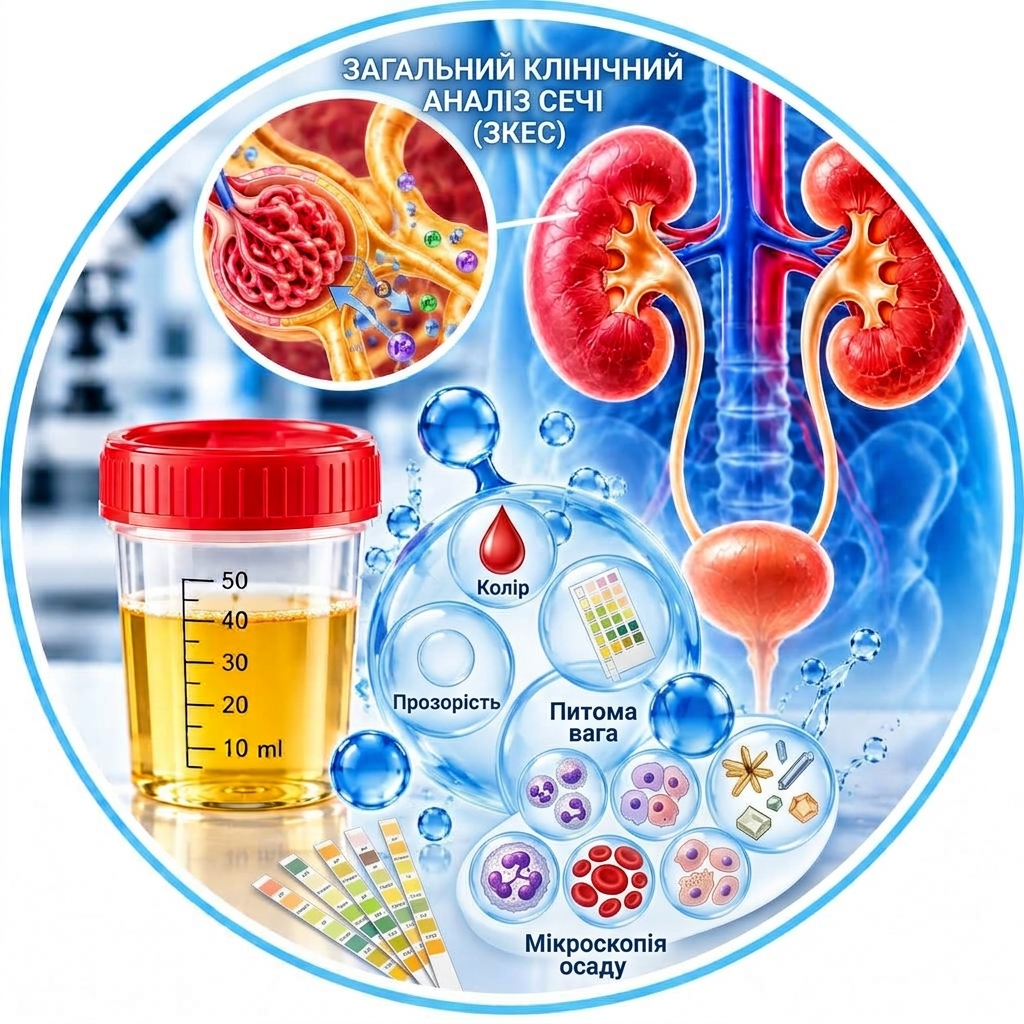
General clinical urinalysis (GCU) is the main basic study for the initial assessment of the state of the urinary system and the general metabolism of the body. The examination includes the determination of key physicochemical parameters, such as color, transparency, specific gravity, as well as rapid tests using chemical strips. A mandatory stage is sediment microscopy for quantitative and qualitative detection of leukocytes, erythrocytes, epithelial cells and salt crystals.
8-12 hours before the study, you should exclude spicy and salty foods, give up foods that can change the color of urine; – if possible, exclude taking diuretics 48 hours before urine collection; – before collecting urine, you should perform a hygienic toilet of the external genitalia; – collect urine in a clean, dry, sterile disposable container, and deliver it to the laboratory according to the collection schedule, within 2 hours after collection; – the first portion of morning urine is used; – for women, the study is recommended to be conducted before the onset of menstruation or 2 days after its end; – for infants – after a thorough hygienic toilet of the external genitalia, it is advisable to collect urine in a urine container, urine squeezed from a diaper is not subject to examination. Urine collection is not performed in the “Medi Lab+” laboratory, urine is collected independently at home and delivered to the laboratory.
Urine is an important biological material for diagnosing various diseases and maintaining the general condition of the human body. General clinical urine analysis (Urine Urine Test) is one of the most important diagnostic procedures in medicine. Let's take a look at why it is so important and how a urine test is performed.
The importance of the ZKAS
ZKAS is an inexpensive and accessible diagnostic method that allows you to obtain important information about the state of the body. The main tasks of ZKAS include:
- Detection of kidney diseases: A urinalysis helps detect kidney problems such as inflammation, stones, kidney failure, and many others. The kidneys play an important role in eliminating toxins and regulating fluid balance in the body.
- Diagnosis of urinary tract diseases: UTI can detect diseases of the bladder, ureters, and other organs of the urinary system, such as cystitis, urethritis, or cancer.
- Assessment of the general condition of the body: Urine contains information about the levels of glucose, proteins, blood, ketones, and other substances that can be important for detecting diabetes, other endocrine diseases, and the general condition of the body.
Urine testing methods
Urine testing requires compliance with certain rules and procedures:
- Gathering urine: Urine for analysis is usually collected in a special container after thorough and ensured hygiene of the external genitalia. The first morning portion of urine is the most informative.
- Sample transportation: Collected urine should be delivered to the laboratory as soon as possible, as urine characteristics may change after collection.
- Physical properties: The first step is to evaluate the physical properties of the urine. The lab technician assesses the color, clarity, odor, and other characteristics.
- Chemical analysis: Next, a chemical analysis is performed, measuring the levels of glucose, proteins, ketones, uric acid, and other substances.
- Microscopic analysis: A lab technician uses a microscope to detect elements such as red and white blood cells, epithelial cells, and crystals.
- Other studies: Other specialized tests may be performed as needed, such as urine culture to identify microorganisms or antibiotic sensitivity.
Conclusion
A general clinical urinalysis is an important component of a medical diagnosis. It allows you to detect various diseases of the kidneys, urinary tract and other body systems. Carrying out the analysis requires compliance with the rules for collecting and transporting urine. The results of the Urinalysis help doctors develop an effective treatment plan and monitor the patient's condition over time. Therefore, it is important to undergo this study on time to maintain your health.
| Execution time | 1 day |
|---|---|
| Type of biomaterial | Morning urine sample |