
Tumor histology: a detailed review of the significance and current possibilities
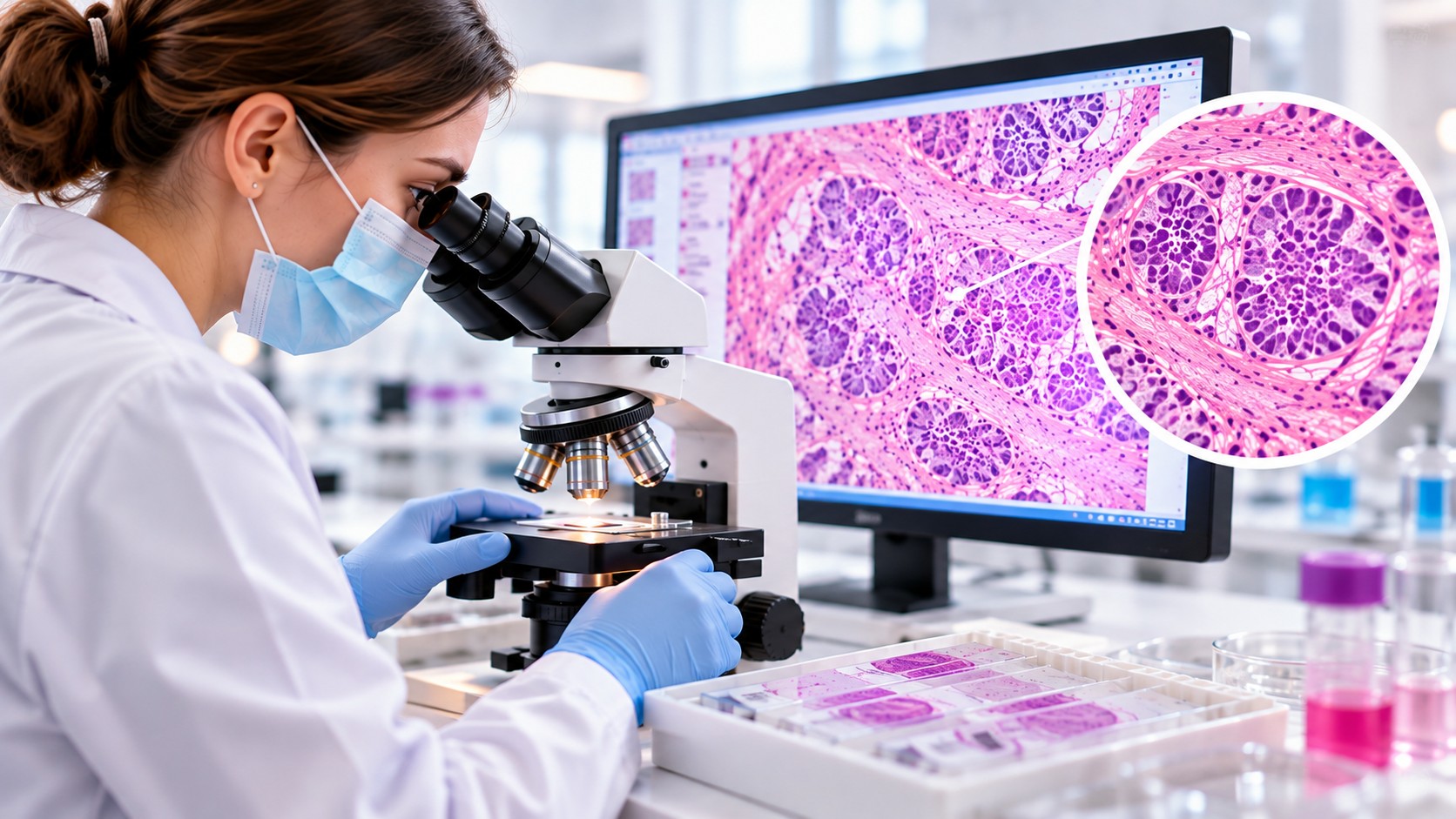
Tumor histology is a method of morphological study of tissues that helps determine the nature of the neoplasm, its histological type and important characteristics that affect further treatment tactics. During the study, a specialist studies the structure of cells and tissues under a microscope, evaluates their features and compares the data obtained with clinical information.
Such a study plays an important role in oncology, as it helps to distinguish between benign and malignant neoplasms, determine the type of tumor and determine whether additional laboratory or molecular genetic studies are needed. The results of histology are evaluated together with the data of the clinical examination, instrumental examinations and other medical information. According to indications, the doctor may prescribe additional tests, in particular, studies of the level of tumor markers, if their results can be useful for clarifying the diagnosis, assessing the course of the disease or monitoring treatment.
What is the histology of tumors?
Histology studies the microscopic structure of tissues. In case of suspicion of a neoplasm, a tissue sample obtained during a biopsy or surgical intervention is examined. The material is prepared using a special technique, stained and analyzed under a microscope.
The pathologist assesses how the cells are organized, whether they retain the properties of normal tissue, how pronounced the structural changes are, and whether there are signs of tumor cell invasion into surrounding tissues. Based on the results of the study, a pathomorphological conclusion is formed.
Histological examination is especially important when the appearance of the neoplasm or the results of ultrasound, CT or MRI cannot reliably determine its cellular nature. Imaging methods show the location, size and other characteristics of the formation, and histology allows you to study its tissue structure.
At the same time, not every neoplasm requires the same examination. The need for a biopsy and further histological analysis is determined by the doctor, taking into account the localization of the neoplasm, clinical signs and results previous studies.
When is a histological examination prescribed?
Histology can be performed in various clinical circumstances. It is most often prescribed when it is necessary to establish the nature of the detected mass or clarify the diagnosis.
Main indications for the study:
- detection of a neoplasm of unknown origin;
- suspicion of a malignant process based on the results of examination or instrumental examinations;
- the need to clarify the type of tumor before choosing treatment;
- examination of tissues removed during surgery;
- assessment of surgical resection margins, if indicated for the appropriate tumor type;
- determining tumor characteristics that affect prognosis and further treatment;
- verification of the diagnosis if previous results are incomplete or contradictory.
Histological examination is used not only in oncology. It also helps to diagnose inflammatory, degenerative and other pathological changes in tissues. The specific scope of the analysis depends on the material obtained and the clinical question to be resolved.
How is a histological examination of a tumor performed?
The study consists of several sequential stages. Compliance with the material preparation method is important for preserving the tissue structure and ensuring the reliability of the result.
1. Obtaining a tissue sample
The material is obtained during a biopsy or surgery. The method of sampling depends on the location of the neoplasm, its size and clinical indications. It can be a small piece of tissue or a larger surgical material.
2. Fixation and preparation of material
The sample is processed according to a laboratory protocol. Many standard histological studies use formalin fixation, which helps preserve the tissue structure. After this, the material undergoes the necessary processing steps, including dehydration and paraffin embedding.
It is important that the material is properly labeled and transported to the laboratory as required. Other storage and preparation methods may be used for specific studies.
3. Preparation of histological sections
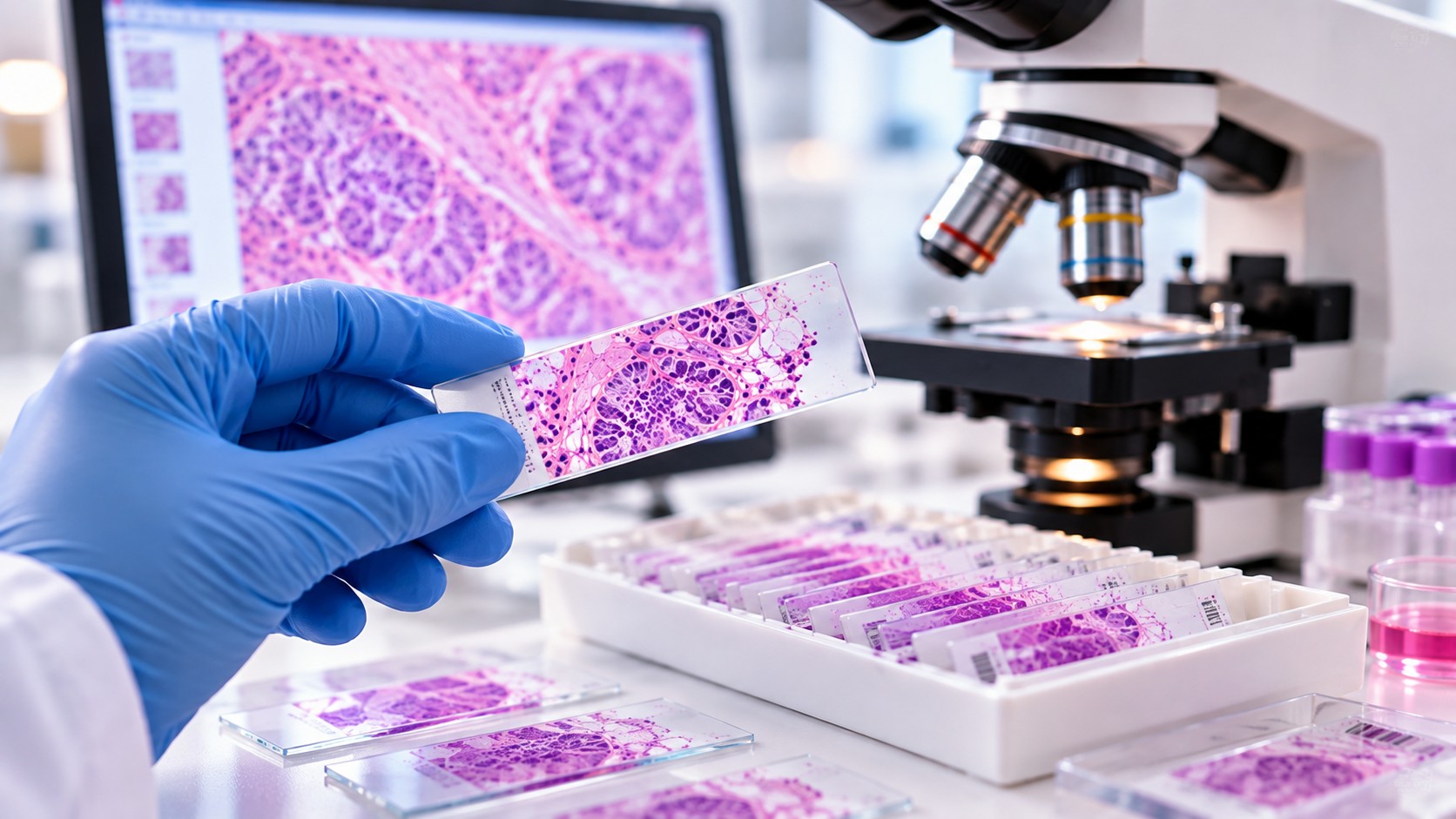
Very thin sections are made from the prepared tissue block using a microtome. They are placed on slides and then prepared for staining.
4. Staining of preparations
Hematoxylin and eosin are often used for standard examination. This stain allows you to distinguish between cell nuclei, cytoplasm, and the general architecture of the tissue.
If necessary, special histochemical methods or other types of staining are used to help clarify individual structural characteristics.
5. Microscopic analysis
The pathologist evaluates the shape and arrangement of the cells, the structure of the tissue, signs of cellular atypia, the nature of the tumor growth, and other parameters important for establishing the diagnosis. Depending on the type of neoplasm, mitotic activity, invasion, necrosis, and other characteristics may be assessed.
If standard staining is not enough to provide a definitive answer, additional studies may be needed.
6. Formation of a pathomorphological conclusion
After the material is analyzed, a report is prepared, which notes the detected changes and, if possible, the exact type of neoplasm. Depending on the clinical situation, the report may indicate the degree of differentiation or grading of the tumor, the condition of the resection margins, the presence of invasion, and other characteristics.
If the material is insufficient or the changes are ambiguous, the conclusion may indicate limitations of the study or the need for additional tests.
What does tumor histology show?
The result of the histological examination helps answer several important questions.
The nature of the neoplasm. The study can help determine whether the mass is benign or malignant. However, the final interpretation depends on the type of material, its quality, and the characteristics of the specific disease.
Histological type. Tumors vary in origin and structure. For example, adenocarcinomas are associated with glandular differentiation, squamous cell carcinomas with squamous epithelium, and sarcomas originate from mesenchymal tissues or demonstrate appropriate differentiation.
Degree of differentiation or gradation. Many types of malignant tumors are graded based on how different their cells and tissue structure are from normal. The meaning of the grade and how it is determined depend on the specific type of tumor.
Invasion into surrounding tissues. In appropriate samples, it is possible to assess whether tumor cells have penetrated beyond the tissue in which the neoplasm originated.
Surgical removal margins. If the surgical specimen is examined, in some cases it is determined whether tumor cells are found at the edges of the resection. This information can be important for planning further treatment.
Additional prognostic characteristics. For individual tumors, mitotic activity, vascular or lymphatic invasion, and other morphological features are taken into account.
It is important to understand that histology alone does not always allow for the staging of the disease or the accurate prediction of the development of metastases. Imaging studies, lymph node evaluation, and other clinical information are often required for staging.
Main types of tumors and their histological features
Tumors are classified by origin, structure, and biological properties. Morphological characteristics help distinguish between types of tumors, but their behavior and prognosis depend on the specific diagnosis.
| Tumor type | Origin or differentiation | What can histology assess? |
|---|---|---|
| Adenocarcinoma | Glandular differentiation of epithelial cells | The structure of glandular structures, cellular atypia, growth pattern, and invasion |
| Squamous cell carcinoma | Squamous epithelium | Signs of squamous cell differentiation, keratinization and nature of spread |
| Sarcoma | Mesenchymal tissues or related differentiation | Tumor type, cellular atypia, mitotic activity, and other criteria, depending on the variety |
| Benign mesenchymal tumors, such as lipoma | Fat or other connective tissue | The structure of the tissue, the nature of the boundaries and the presence of signs that require the exclusion of a malignant process |
| Lymphoma | Cells of the lymphoid system | Cell morphology; immunohistochemical and other specialized studies are often also required |
There is no single prognosis for all tumors of one broad type. It depends on the specific diagnosis, location, stage, grade of malignancy, molecular features, and response to treatment. Therefore, the histological conclusion is evaluated in the context of all clinical data.
Histology, cytology and immunohistochemistry: what is the difference?
These methods may complement each other, but they are not identical.
Histological examination involves assessing tissue structure. It helps to see not only individual cells, but also how they are arranged and interact within the tissue.
Cytological examination studies individual cells or groups of cells. The material may be obtained, for example, by fine-needle aspiration, smear, or examination of certain body fluids. In some situations, cytology is sufficient to answer a clinical question, but in others, tissue examination is required.
Immunohistochemistry is a method that detects certain proteins in cells and tissues using specific antibodies. It is used to clarify the origin of a tumor, perform differential diagnosis, and identify biomarkers that may influence treatment choices.
Immunohistochemical markers are selected according to the specific clinical problem. Not all markers are needed for every neoplasm, and the results are evaluated together with the morphological picture and other data.
Modern possibilities of histological diagnostics
Modern pathological diagnostics combines classical tissue examination with additional methods that help to more accurately classify tumors and select treatment.
Immunohistochemical studies
Immunohistochemistry helps to identify the protein profile of tumor cells. This can be important for distinguishing tumors with similar microscopic structures, as well as for evaluating individual biomarkers.
For example, when breast cancer Estrogen and progesterone receptor and HER2 status may influence the choice of systemic treatment. It is important to note that the specific tests performed depend on the diagnosis and current clinical guidelines.
Molecular genetic studies
Some tumors have genetic changes that can help to more accurately identify their type or determine the suitability of certain drugs. Molecular tests can be used to do this, including: DNA analysis methods or RNA.
Such studies do not replace morphological analysis in all cases, but complement it when necessary. The decision to perform them is made taking into account the type of tumor, the stage of the disease and the potential impact of the result on treatment.
Digital pathology
Digital pathology involves scanning histological specimens and viewing them in digital format. This allows for high-resolution images to be stored, materials to be shared between specialists, and specialized software to be used for analysis.
Artificial intelligence algorithms can help with specific tasks, such as finding patterns or quantifying metrics. However, the results of such tools need to be properly validated and applied for their intended purpose. Digital technologies do not automatically mean that professional interpretation is unnecessary.
How histology influences treatment choices
The pathologic report is an important source of information for the physician planning treatment. Depending on the tumor type and clinical situation, the results may influence the choice of surgical intervention, the need for additional examinations, the use of drug therapy, or further monitoring.
For example, in breast cancer, histological type is supplemented by biomarker evaluation, including ER, PR, and HER2, when indicated. This information helps determine which treatment options may be appropriate for a particular patient.
In sarcomas, accurate tumor classification and grade, as well as location, size, stage, and ability to completely remove the tumor are important. For some neoplasms, additional molecular studies may be of significant diagnostic value.
Histological results can also complement other examination methods, including the determination of <a href="/en/%e2%80%9dhttps%3a//medilab.km.ua/the-role-of-markers-of-submucosal-tumor-in-early-diagnosis-and-disease-control/%e2%80%9d/">pancreatic tumor markers</a>, when the doctor considers such tests appropriate. Tumor markers are not a universal way to confirm or rule out cancer: their informativeness depends on the specific marker and clinical situation.
Thus, histology helps to form the morphological basis of the diagnosis, but optimal treatment tactics usually require a comprehensive assessment.
How long does a histological examination take?
The turnaround time depends on the type of material, the complexity of the case, the scope of the study, and the need for additional methods. Standard tissue processing takes time, and immunohistochemical or molecular tests may extend the wait for the result.
Therefore, there is no universal deadline for all histological studies. The approximate deadline should be clarified with the institution that receives the material. If additional staining, consultation with another specialist or special tests are required, the final conclusion may be prepared later.
How to prepare for a histological examination
Preparation depends primarily on the procedure during which the tissue is obtained. The histological examination itself is performed on the material already taken, so separate rules apply. preparation for laboratory analysis are not the same for all patients.
Before a biopsy or surgery, it is necessary to follow your doctor's recommendations regarding diet, medication, including medications that affect blood clotting, and other features of the procedure. You should not stop taking prescribed medications on your own.
If the material has already been obtained, it is important to follow the instructions for its labeling, storage and transportation. The necessary conditions depend on the type of study, so they should be clarified with the medical institution or laboratory.
Frequently asked questions about tumor histology
Can histology determine whether a tumor is benign or malignant?
In many cases, histological examination allows us to distinguish between benign and malignant neoplasms. However, the result depends on the quality and volume of the material, the type of tumor, and the need for additional tests.
Does a referral for histology mean that a person has cancer?
No. Histological examination is prescribed to clarify the nature of tissue changes. It is performed both when a malignant process is suspected and to clarify benign and other pathological conditions. The fact of referral alone does not confirm an oncological diagnosis.
Can cancer be staged based on histology alone?
Usually not. Histology provides important information about the type and characteristics of the tumor, and staging requires an assessment of its spread. This is done using imaging studies, lymph node information, and other data.
How is histology different from biopsy?
Biopsy is the procedure of obtaining a tissue sample. Histology is the examination of this material under a microscope after appropriate preparation. So, biopsy helps to obtain the material, and histological analysis - to study its structure.
Are additional tests needed after histology?
Not always. If the data obtained is sufficient to establish a diagnosis and plan further actions, additional tests may not be necessary. In other cases, the doctor may recommend immunohistochemistry, molecular studies, or additional examinations.
Why is it important to correctly interpret the histology result?
Histological examination is one of the key tools of modern morphological diagnostics. It helps to determine the type of neoplasm, assess important tissue characteristics, and provide information necessary for planning further examination and treatment.
However, the pathologic report should be considered in the context of the clinical picture, imaging findings, and other investigations. If the report includes additional markers, special tests, or recommendations for further diagnosis, their significance should be discussed with the physician.
A comprehensive approach allows for a more accurate diagnosis and a well-founded management strategy. Final treatment decisions are made by the doctor, taking into account all available clinical data and current recommendations.

Director of Medi Lab Plus LLC, a doctor of the highest category. Has over 45 years of practical experience in medicine and laboratory diagnostics. Founder and head of the laboratory since 2007. More details…

