
Lyme disease
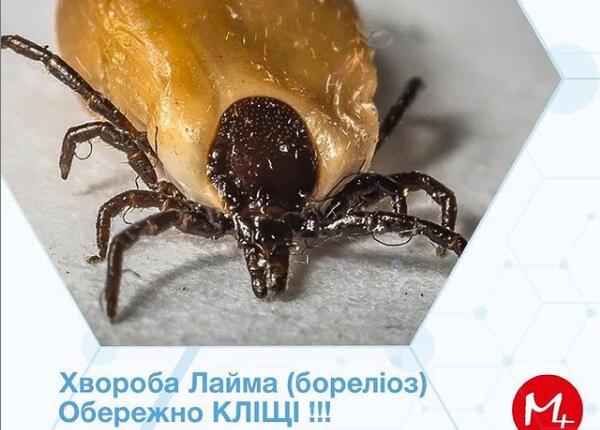
🪲 Zoonotic infection with a transmissible transmission mechanism, which is a vector between animals and humans, between April and October. The causative agent of the disease is the microorganism Borrelia burgdorferi, a species of Ixodes ticks.
❌🙅🏼♀️The most vulnerable areas on the body (both in humans and pets): head, neck, armpits, groin.
⚠️ The tick bites and burrows into the victim's skin, thereby feeding on the liquid connective tissue (blood), and then falls off. If you notice a tick, you must immediately remove it so as not to damage the tick's body and not leave its head inside the victim's skin. ❗️Do not forget to treat the bite surface with an alcohol solution❗️
🚸 What What you need to know to prevent a bite?! How to find out if you are infected with an uninvited guest?!
Before, during, after outdoor recreation:
– clothing should be light-colored with long sleeves and pants, which, in turn, should be tucked into socks;
– use tick and insect repellent before going for a walk;
– after a walk, you need to change your clothes and check yourself and your child for the presence of a tick on the surface of the skin or a ring-shaped redness that forms after a bite.
🆘 If you notice a bite, you must:
1. Monitor the bite site for 30 days. A ring-shaped redness (erythema) up to >5 cm in diameter may appear at the bite site. You should immediately contact your family doctor or infectious disease specialist for further examination and appointment of examination and treatment.
2. To completely exclude the possibility of infection, even if the bite site is unchanged, tests for 📛antibodies (Ig G, Ig M) to Borrelia📛 are taken on the 30th and 60th day after the bite, since erythema is not always observed. The determination of antibodies makes it possible not to miss the infection, thereby not to lose time for treatment.

Head of the clinical diagnostic laboratory of Medi Lab Plus LLC, Master of Biochemistry with over 15 years of management experience. Monitors compliance of research with international EUCAST protocols and ISO 15189 standard. Acts as a medical editor of the site materials. More details…

