
Nanotechnology in diagnostics: precision that is changing medicine

The medicine of the future is no longer a fantasy. Today, scientists are able to create devices smaller than a human cell that can detect diseases before symptoms appear, recognize single molecules of viruses or mutations, and instantly transmit the results to a doctor. This is the world nanotechnology in diagnostics — a revolutionary direction that opens up new horizons in early disease detection and personalized medicine.
What is nanotechnology in medicine?
Nanotechnology is the use of structures ranging in size from 1 to 100 nanometers, which allows you to work at the molecular level. In medicine, they allow you to create intelligent nanostructures that:
detect diseases in fluids or tissues
deliver medicine to certain cells
interact with genetic material
change color, shape, or electrical properties, when certain molecules are encountered
Nanodiagnostics has become the core of a new approach — preventive medicine, where diseases are not treated, but are warned even before the clinical picture appears.
Types of nanomaterials used in diagnostics
| Type of nanostructure | Function in diagnostics |
|---|---|
| Gold and silver nanoparticles | Signal amplification in biomarker analysis (e.g., PCR) |
| Magnetic nanoparticles | Targeted “highlighting” of cells for MRI imaging |
| Quantum dots | Fluorescent labels for detecting genetic abnormalities |
| Nanotubes and nanofilms | Creating sensors that change conductivity upon contact with certain biomolecules |
| Nanoporous silicon platforms | For ultra-fine recognition of viruses, bacteria, toxins |
These nanomaterials are used not only in laboratories, but also in portable devices, which can be used even at home.

Clinical examples of nanodiagnostics
1. Early stage cancer
Circulating tumor DNA or protein markers that cannot be detected by standard tests are recognized using gold nanoparticles that “stick” to abnormal molecules and change the optical properties of the solution.
→ Diagnosis of breast, lung, and prostate cancer at a stage when there are no metastases yet.
2. Infectious diseases
Nanochips can identify influenza virus RNA or SARS-CoV-2 in saliva in minutes, without laboratory PCR.
→ Used in field diagnostics or for rapid triage of patients in emergency departments.
3. Cardiology
Nanosensors detect heart attack biomarkers (troponins) even before they reach the threshold in a routine blood test.
→ This allows treatment to begin to the development of complications, saving patients' lives.
4. Neurodiagnostics
Nanostructures are being studied as a detection method β-amyloid in Alzheimer's disease long before the first symptoms.
→ This opens the way to early intervention and slowing down the neurodegenerative process.
Nanotechnology + artificial intelligence = revolution
AI systems integrate with nanosensors to:
recognition non-obvious data patterns
fast signal processing from biochips in real time
formation personalized diagnostic recommendations
In the future, the patient will receive nanodevice on the wrist or under the skin, that will collect data and will warn about the risks of stroke, diabetes, cancer or autoimmune processes even before symptoms appear.
Advantages of nanodiagnostics
Ultrasensitivity — detection of 1–10 molecules
Speed — results in minutes
Painlessness — in most cases, saliva, sweat, or a drop of blood is enough
Possibility of miniaturization — suitable for creating wearable devices
Future availability — a decrease in the cost of technologies is predicted
Limitations you should know about
Insufficient regulation and standardization of nanomedical products
Scaling difficulty at the state level
The need for in-depth staff training
Long-term clinical safety studies (uncontrolled nanoparticles can accumulate in the body)
Nanotechnology in diagnostics is not just microchips or nanogold, but an entire era of medicine where a billionth of a meter can save a life. And although there are still many challenges ahead, it is already clear: the smaller the technology, the greater its impact on human health.
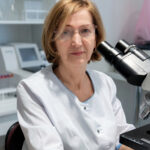
Highly qualified cytomorphologist with over 45 years of experience. For 33 years, she headed the cytology laboratory of the regional oncology clinic. Expert in early diagnosis of malignant neoplasms at Medi Lab Plus LLC. More details…

