
Anti-Mullerian hormone, AMH
730 UAH
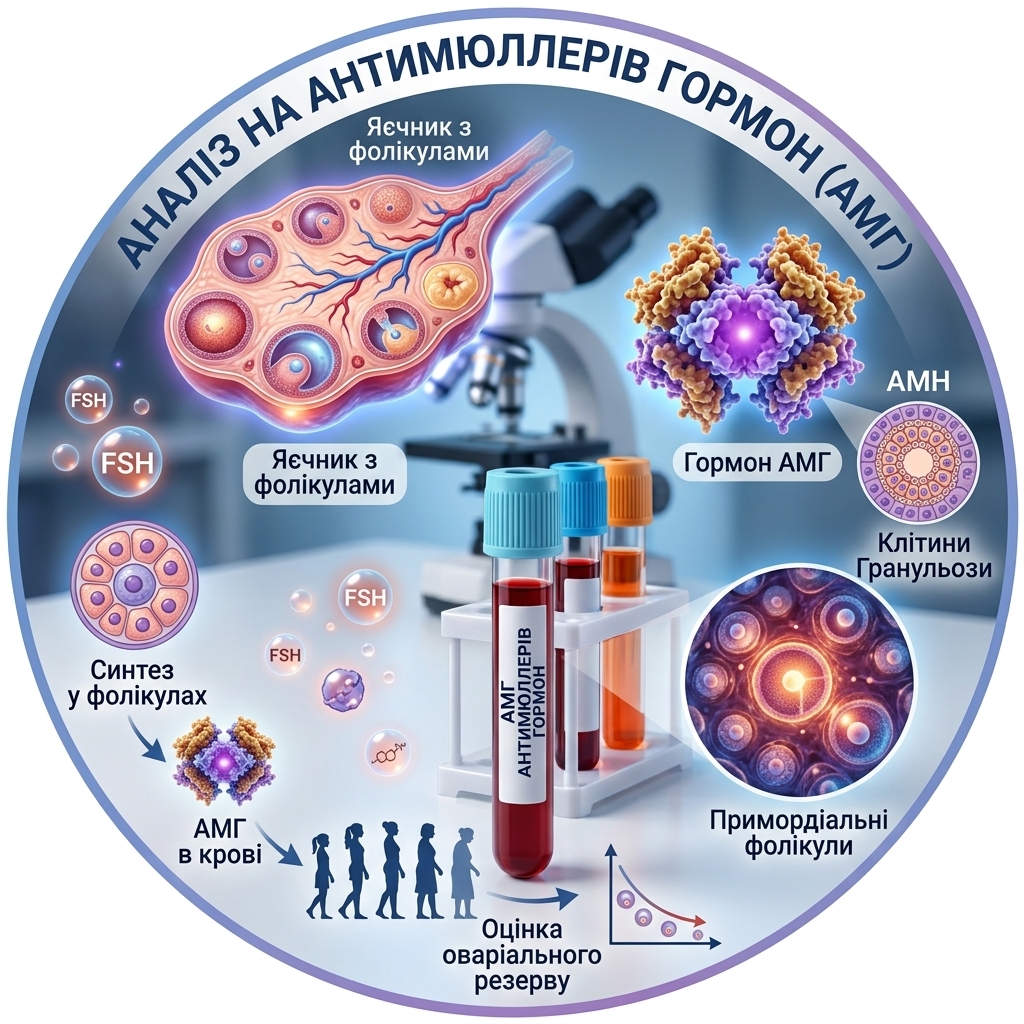
Anti-Mullerian Hormone (AMH) Test — is a key marker for assessing the ovarian reserve of a woman. The study allows you to determine the number of eggs capable of fertilization, assess ovarian function and predict reproductive potential. It is used in pregnancy planning, preparation for IVF, as well as for the diagnosis of premature ovarian failure and some hormonal disorders.
Anti-Mullerian Hormone (AMH) and its role in the hormonal panel for reproductive function diagnostics
Reproductive function is an important component of a woman's health and her ability to have children. Modern methods of diagnosing the reproductive system make it possible to assess the state of reproductive function and predict the possibility of pregnancy. One of the important indicators used in these studies is anti-Mullerian hormone (AMH).
Anti-Mullerian hormone, or AMH, is a protein produced in the ovaries of women. This hormone plays a key role in regulating reproductive function and the development of follicles that contain eggs. AMH helps control the number of follicles in the ovaries, and thus affects a woman's cycle and the possibility of pregnancy.
One of the main areas where AMH is useful is in assessing egg reserve. Egg reserve is the number of eggs remaining in a woman’s ovaries. As a woman ages, the number of eggs she has decreases, which reduces her chances of conceiving and becoming pregnant. AMH testing can help determine the status of egg reserve and predict future pregnancy possibilities.
Diagnostics of reproductive function using a hormonal panel, which includes measuring AMH levels, can be useful for women planning pregnancy, as well as for those facing reproductive system problems.
Key aspects included in hormonal panel for reproductive function diagnostics, may include:
- Measuring AMH levels: This allows you to determine the status of your egg reserve and predict the possibility of pregnancy.
- Measurement of gonadotropin (FSH) and luteinizing hormone (LH) levels: Elevated levels of these hormones may indicate reproductive dysfunction.
- Measuring estradiol levels: Estradiol is a female hormone, and its levels are also important for reproductive health.
- Measurement of other hormones, such as prolactin and thyroid hormones: Disturbances in the levels of these hormones can affect reproductive function.
It is important to note that hormone panel results can be individual and are best interpreted by specialists in gynecological centers. These data help to establish a diagnosis and develop an individual treatment plan for women who have reproductive problems.
The general conclusion is that anti-Mullerian hormone (AMH) and hormonal panel for reproductive function diagnostics are important tools for assessing and monitoring women's health and fertility. This data helps women make informed decisions about family planning and treatment of reproductive problems.
| Execution time | 1 day |
|---|---|
| Type of biomaterial | Venous blood |
Useful tests