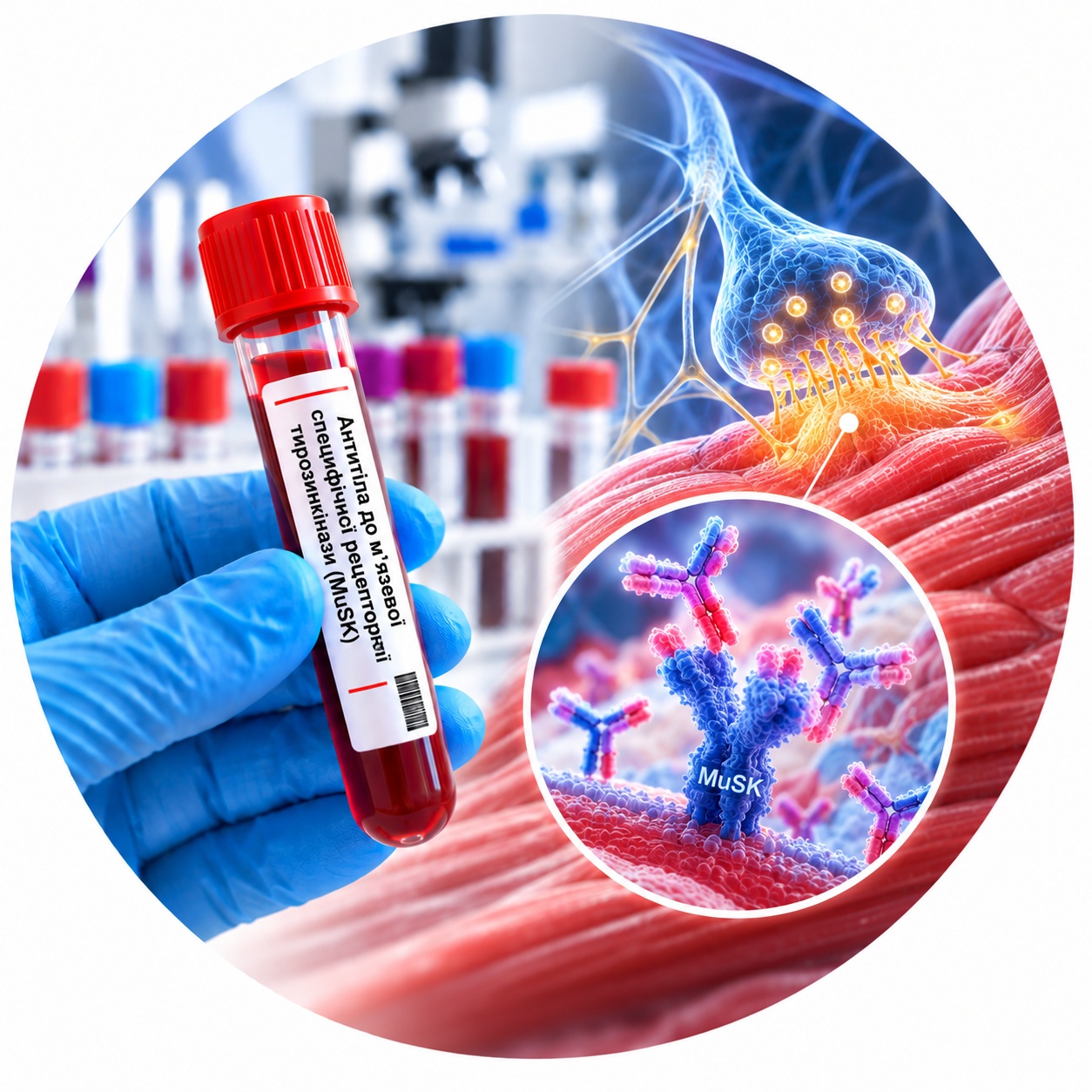


Antibodies to muscle-specific receptor tyrosine kinase (MuSK)
1,800 UAH
The muscle-specific receptor tyrosine kinase (MuSK) antibody test is a laboratory test of venous blood for the diagnosis of autoimmune myasthenia gravis. It helps detect antibodies that disrupt the transmission of nerve impulses to the muscles, particularly if the MuSK-positive form of the disease is suspected. The result is evaluated together with symptoms and other examination data.
What are antibodies to MuSK?
Muscle-specific receptor tyrosine kinase (MuSK) is a protein that plays an important role in the formation and maintenance of the neuromuscular junction, where nerve impulses are transmitted to the muscle, causing it to contract.
In myasthenia gravis, the immune system can produce antibodies to the body's own proteins. Antibodies to MuSK disrupt the normal functioning of the neuromuscular junction, causing muscles to weaken and tire more quickly. Detection of these antibodies helps diagnose the MuSK-positive form of myasthenia gravis.
When is it recommended to undergo analysis?
The study may be prescribed by a doctor in the following cases:
- for suspected myasthenia gravis, especially if antibodies to acetylcholine receptors (AChR) are not detected;
- in the presence of muscle weakness that worsens during exercise;
- with drooping upper eyelids (ptosis) or double vision;
- for chewing, swallowing or speech disorders;
- with weakness of the muscles of the face or neck;
- to clarify the diagnosis based on the results of a neurological examination and other studies.
What does the analysis result show?
Positive result means that antibodies to MuSK have been detected in the blood. If there are characteristic symptoms, this is a strong argument in favor of MuSK-positive myasthenia gravis. The result is evaluated together with clinical manifestations and data from other examinations.
Negative result means that antibodies to MuSK are not detected within the sensitivity range of the method used. However, this does not rule out myasthenia gravis, as the disease may be associated with antibodies to other targets or may occur without detection of antibodies to MuSK.
The final diagnosis is made by a doctor based on symptoms, the results of a neurological examination, and, if necessary, electrophysiological studies.
How to prepare for the analysis
Venous blood is used for the study.
- Special training is usually not required.
- Donating blood on an empty stomach is usually not necessary unless the laboratory has provided other recommendations.
- Tell your doctor about the medications you are taking.
- Do not stop the prescribed treatment on your own before taking the test.
| Execution time | 1 day |
|---|---|
| Type of biomaterial | Venous blood |
Useful tests