
Antineutrophil cytoplasmic proteinase 3 antibodies (anti-PR3, c-ANCA), IgG
820 UAH
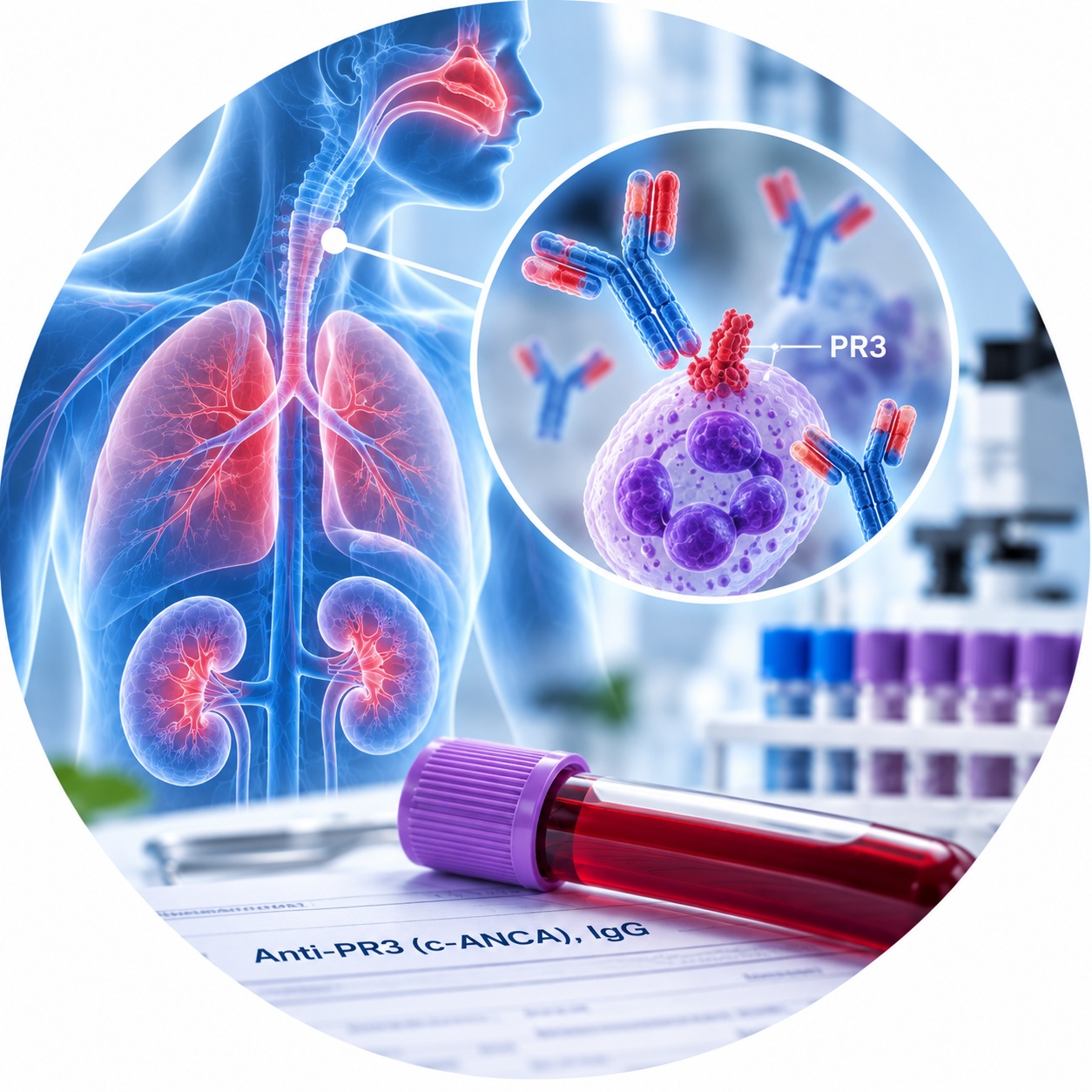
Antineutrophil cytoplasmic proteinase 3 antibodies (anti-PR3, c-ANCA), IgG — blood test to detect autoantibodies to proteinase 3, which are important in the examination for ANCA-associated systemic vasculitides, primarily granulomatosis with polyangiitis (GPA). The result helps the doctor assess the likelihood of autoimmune vascular damage, but does not in itself establish a diagnosis.
Anti-PR3, c-ANCA, IgG — a laboratory test that determines IgG class antibodies to proteinase 3 (PR3) — an enzyme found mainly in neutrophil granules.
This indicator has the greatest diagnostic value when there is suspicion of ANCA-associated vasculitides. Positive anti-PR3 is especially characteristic of granulomatosis with polyangiitis, a systemic disease in which the inflammatory process can affect small and medium-sized blood vessels.
What does the analysis show?
The test determines whether PR3 antibodies are present in the blood. Their detection can be an important part of the diagnostic workup for symptoms that may indicate systemic vasculitis.
Depending on the clinical situation, the doctor may pay attention to the following manifestations:
- prolonged inflammation of the nose and sinuses;
- repeated nosebleeds or crusting in the nose;
- cough or shortness of breath of unexplained origin;
- blood in the urine or changes in urine tests;
- deterioration of kidney function;
- skin rashes associated with inflammation of the blood vessels;
- general weakness, fever and other systemic manifestations.
When is anti-PR3 prescribed?
The test may be recommended if there is suspicion of:
- granulomatosis with polyangiitis;
- ANCA-associated systemic vasculitis;
- autoimmune kidney damage combined with other characteristic changes;
- a systemic inflammatory process with unexplained involvement of multiple organs.
The result can also be used in conjunction with other laboratory tests to clarify the nature of the autoimmune process.
What does a positive result mean?
Positive anti-PR3 increases the likelihood of ANCA-associated vasculitis, especially in the presence of relevant clinical manifestations. At the same time a positive result is not an independent confirmation of the diagnosis.
A complete blood count, creatinine, urinalysis, inflammatory markers, MPO-ANCA studies, and other tests may be necessary for proper evaluation. In some cases, definitive diagnosis requires instrumental studies or a biopsy of the affected tissue.
If the result is negative
Negative anti-PR3 reduces the likelihood of the disease for which this marker is characteristic, but does not exclude all types of vasculitis and other autoimmune diseases. The result is always evaluated taking into account symptoms and other tests.
Preparation for analysis
For research, it is used venous blood.
Before submission, it is advisable to:
- follow the laboratory's recommendations regarding food intake;
- avoid alcohol and excessive physical exertion the day before;
- rest calmly before blood collection;
- Tell your healthcare provider about the medications and treatments you are receiving.
You should not stop taking prescribed medications on your own. before the study.
Importantly
Anti-PR3 is not a universal test for autoimmune diseases. Its use is most important when there are clinical or laboratory signs that may be consistent with ANCA-associated vasculitis. The result should be evaluated comprehensively, and not in isolation from symptoms and other indicators.
| Execution time | 1 day |
|---|---|
| Type of biomaterial | Venous blood |
Useful tests