
Urea
160 UAH
Biochemical analysis blood to assess purine metabolism and diagnose salt balance disorders. Helps identify the risk of developing gout, urolithiasis and assess the functional state of the kidneys.
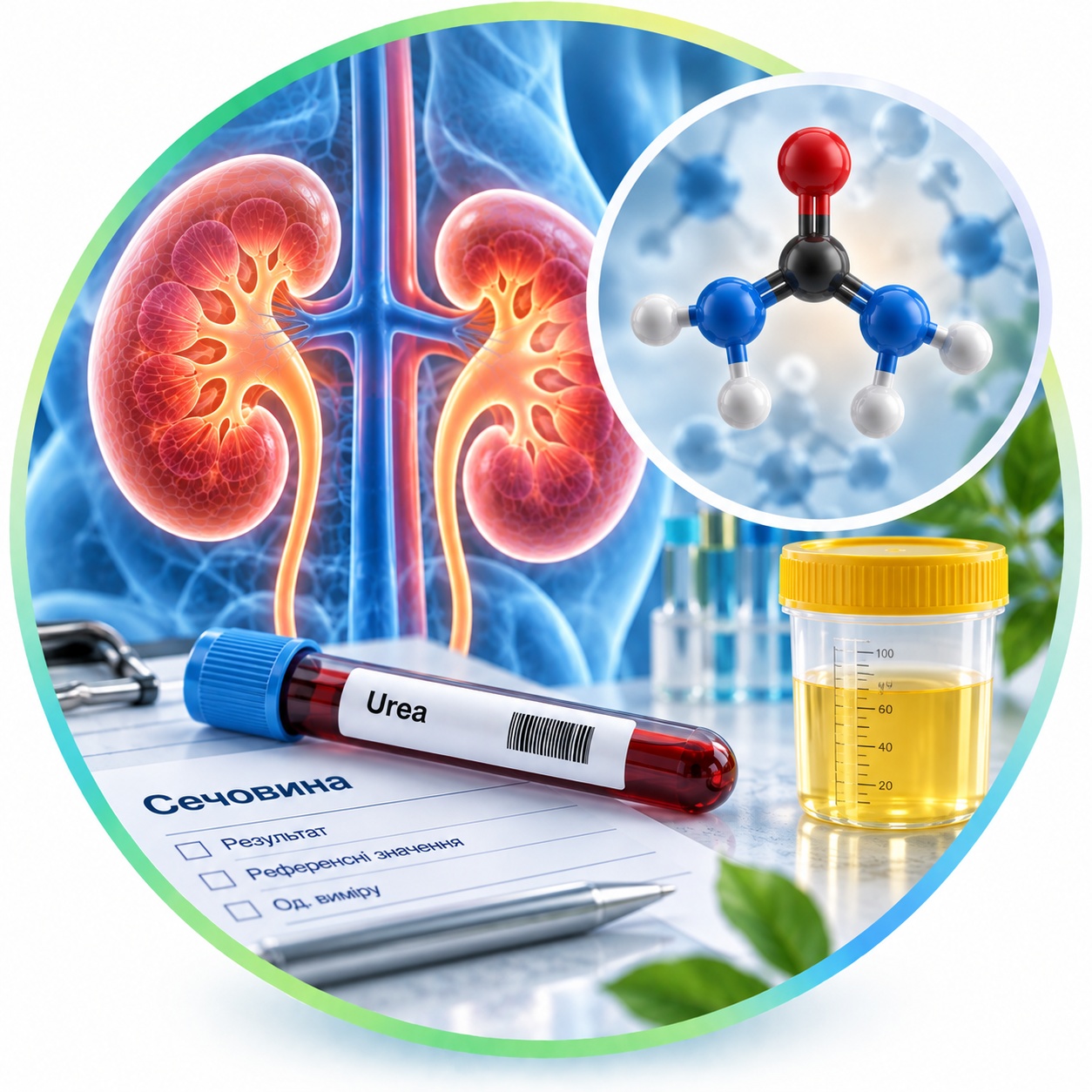
Biochemical blood analysis is one of the key methods for diagnosing and monitoring human health. One of the indicators of this analysis - the level of urea in the blood - provides important information about the functioning of the kidneys and the overall metabolism of the body. Urea is the end product of amino acid metabolism, the main building blocks of proteins. The main part of amino acids in the body breaks down under the action of enzymes in the liver, turning into ammonia. Ammonia is a toxic metabolic product, so it is quickly converted into a less toxic compound - urea. The resulting urea is removed from the blood through the kidneys, filtered and excreted in the urine.
The function of the kidneys is to cleanse the body of harmful substances and maintain fluid and electrolyte balance. One key aspect of this work is the filtration of blood, which occurs in the kidneys. The kidneys are made up of millions of microscopic filtering units called nephrons. Each nephron includes a filter, the glomerulus, and tubules, where useful substances are reabsorbed back into the blood. Urea also regulates the balance of water and ions in the kidneys. Urea and its role in the body is not only to remove metabolic waste products, but also to maintain the osmotic pressure of the blood plasma. This helps regulate the volume of fluid in the body and ensure proper cell function. Thus, the kidneys, by filtering urea, play an important role in maintaining homeostasis.
The amount of urea excreted by the kidneys depends on many factors, including the amount of fluid consumed in food, the ambient temperature, and the level of physical activity. When kidney function is impaired, this can lead to increased levels of urea in the blood because the kidneys are unable to remove it effectively. This can be caused by chronic kidney disease, infections, injuries, or even certain medications.
An increase in blood urea nitrogen, known as azotemia, can be an indicator of kidney function deterioration. It is important to note that abnormal urea nitrogen levels do not always indicate serious kidney problems. Other factors, such as dehydration, liver disease, heart disease, or even prolonged fasting, can also affect urea nitrogen levels.
In most cases, elevated blood urea nitrogen levels require further investigation and diagnosis to determine the exact cause. Additional clinical, laboratory, and imaging studies may be used to determine the cause.
Therefore, the level of urea in the blood is an important biochemical parameter that reflects kidney function and the metabolic state of the body. Deviations in this indicator can be a symptom of various conditions and diseases, so it is important to consider it in a comprehensive assessment of the health of patients.
| Execution time | 1 day |
|---|---|
| Type of biomaterial | Venous blood |
Useful tests