
Lipid profile
600 UAH
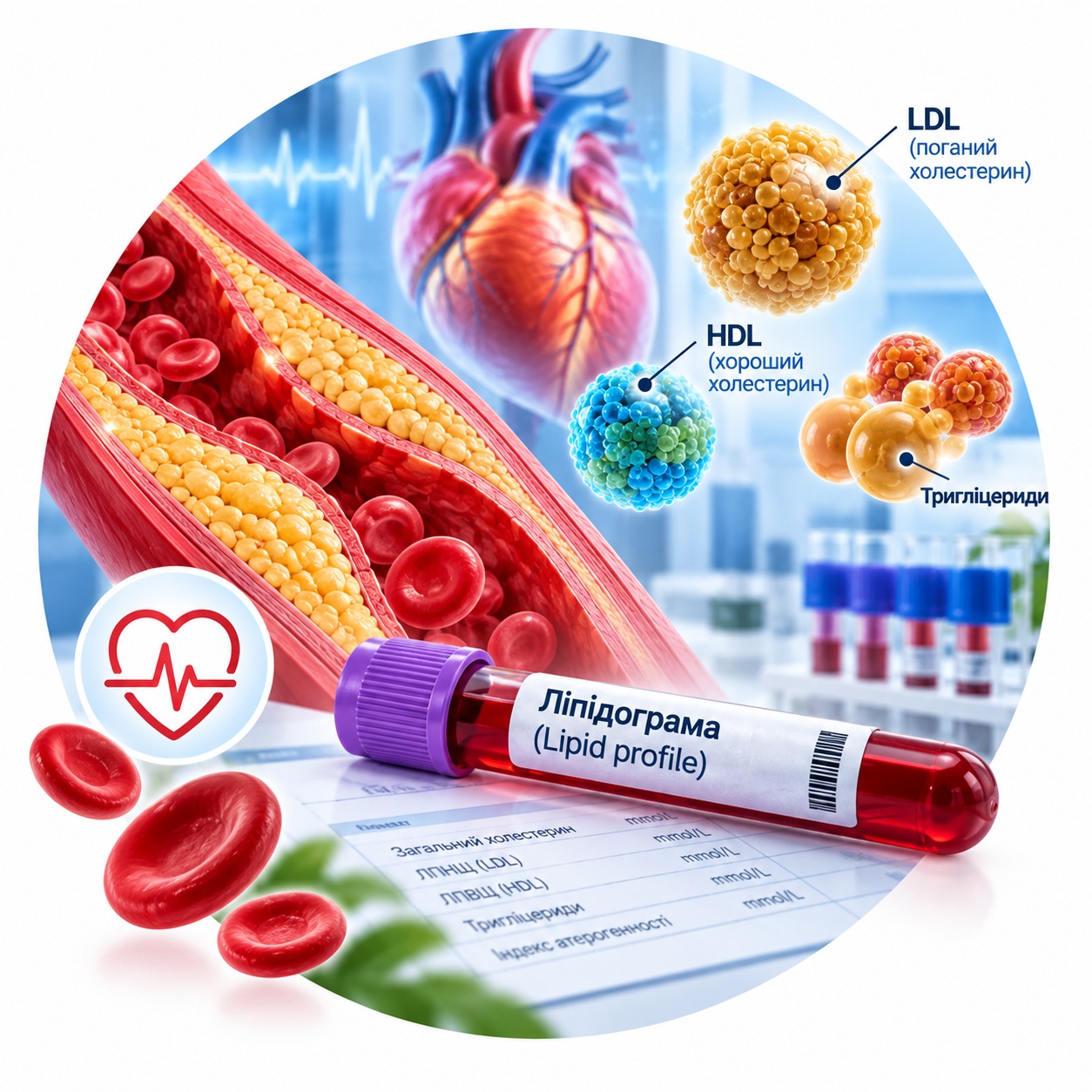
Lipid profile blood test — is a comprehensive study of fat metabolism, which includes determining the levels of total cholesterol, HDL ("good" cholesterol), LDL ("bad" cholesterol), triglycerides and calculating the atherogenic coefficient. The test allows you to assess the risks of developing atherosclerosis, coronary heart disease, heart attack and stroke, as well as monitor the effectiveness of hypolipidemic therapy.
Lipid profile is a complex biochemical blood test that allows you to determine the levels of different types of lipids in a person's blood. Lipids are an important component of the body, as they perform numerous functions, such as providing energy, building cell membranes, synthesizing hormones, and many others.
Lipids are divided into several categories, including:
- Triglycerides: These are the main form of fat stored in adipose tissue and serve as a source of energy. They are formed from glycerol and fatty acids.
- Cholesterol: This is a fat-soluble compound that plays an important role in the construction of cell membranes and the synthesis of hormones.
- High-density lipoproteins (HDL) or “good cholesterol”: These particles help transport cholesterol from tissues to the liver for further processing and excretion from the body.
- Low-density lipoproteins (LDL) or “bad cholesterol”: These particles carry cholesterol from the liver to the tissues and can be deposited on the walls of the arteries, causing the formation of atherosclerotic plaques.
A lipid profile includes measurements of triglycerides, total cholesterol, LDL, and LDL cholesterol in the blood. This test is important for assessing the risk of cardiovascular disease, as high levels of total cholesterol and LDL cholesterol can contribute to the formation of atherosclerotic plaques that restrict blood flow and can lead to heart attacks and strokes.
Interpretation of lipid profile results is usually based on recommendations from medical organizations. Typically, cholesterol levels are considered normal if total cholesterol is less than 200 mg/dL, LDL is greater than 40 mg/dL (in men) and 50 mg/dL (in women), and LDL is less than 130 mg/dL.
If lipid profile results show high cholesterol and LDL cholesterol levels, doctors may recommend dietary changes, reducing saturated and trans fat intake, increasing physical activity, and, in some cases, prescribing cholesterol-lowering medications.
In conclusion, lipid profile is an important tool for assessing the state of lipid metabolism in the body, determining the risk of cardiovascular diseases, and developing individual treatment and prevention plans. Regular monitoring of blood lipid levels can contribute to maintaining overall health and longevity.
| Execution time | 1 day |
|---|---|
| Type of biomaterial | Venous blood |
Useful tests