


Posts by Medilab An

Tick allergy: how to recognize and protect yourself at home

The Invisible Enemy in Pillows and Mattresses Every day we come across millions of microscopic organisms without even noticing it. Among them, dust mites that live in bedding, carpets, and upholstered furniture are particularly unpleasant. For most people, they are harmless, but for some, they cause a powerful allergic reaction - from chronic rhinitis to bronchial asthma. Mite allergy is one of the most common forms of household allergies, which is often confused with the common cold or seasonal rhinitis. What is a mite allergy? A mite allergy is a reaction of the immune system to proteins contained in the body, saliva, and feces of mites of the Dermatophagoides family. These mites feed on dead human skin cells and actively multiply in a moist, warm environment. The most allergens are found in: bed linen pillows mattresses blankets upholstered furniture carpets soft toys The problem is that even after the mites die, their feces and body fragments remain in the air and cause a reaction. The main symptoms...

Folic acid blood test: step-by-step instructions
Sometimes we look for the causes of constant fatigue, memory impairment or low mood in complex diagnoses, while the cause may be much simpler - folic acid deficiency. This vitamin imperceptibly, but vitally supports the work of our hematopoietic, nervous and immune systems. Its level becomes especially relevant for those who are preparing to become parents, suffer from anemia or have chronic gastrointestinal diseases. That is why a blood test for folic acid is not a formality, but an important tool in maintaining health. Step 1. Understanding the role of vitamin B9 Folic acid is a B vitamin that participates in cell division, DNA and red blood cell synthesis. It is especially important during the period of active growth, pregnancy, as well as for the functioning of the nervous and hematopoietic systems. When the level of folate in the blood decreases, symptoms of weakness, sleep disorders, anemia, depression or fetal development delay may appear. Step 2. Determining indications for taking the test It is recommended...

BRCA1 and BRCA2: What you need to know about genes linked to cancer risk
What are BRCA1 and BRCA2 BRCA1 and BRCA2 are genes that are responsible for repairing damaged DNA in cells. They act as so-called "tumor suppressors," meaning they prevent uncontrolled cell growth. But if there is a mutation in these genes, the DNA repair process is disrupted — and the likelihood of developing malignant tumors increases, primarily breast and ovarian cancer. What is the connection between BRCA mutations and cancer? According to the National Cancer Institute, women with BRCA1 or BRCA2 mutations have a lifetime risk of developing breast cancer of up to 72 %, and ovarian cancer of up to 44 %. Men with such mutations also have an increased risk of prostate and breast cancer. These mutations can be hereditary — that is, passed on from a father or mother even if the parents themselves have no symptoms. When to get tested for BRCA If there has been a family history of breast cancer, especially before the age of 50 ...
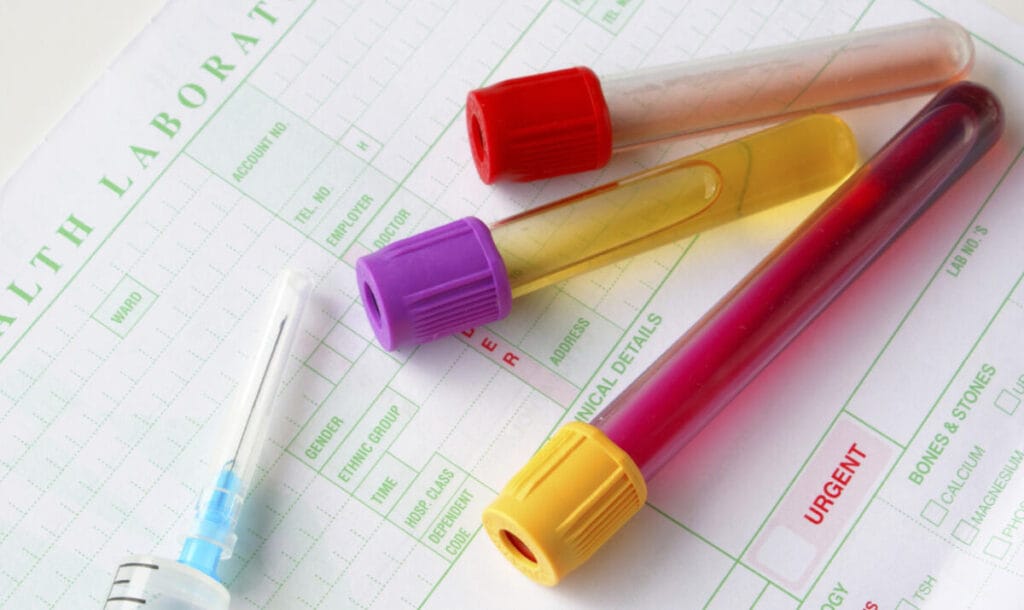
TORCH infections: what it is, when to get tested and why it's important
What are TORCH infections? TORCH is an abbreviation that unites a group of infections that are especially dangerous during pregnancy. They have the ability to be transmitted to the fetus in utero and can lead to serious damage to the nervous system, sensory organs, congenital malformations or even intrauterine death. The abbreviation TORCH stands for: T (Toxoplasma gondii) - toxoplasmosis O (Others) - others: syphilis, HIV, parvovirus B19, chickenpox virus R (Rubella) - rubella C (Cytomegalovirus, CMV) - cytomegalovirus H (Herpes simplex virus, HSV) - herpes simplex virus (types 1 and 2) These infections are especially dangerous for the fetus when the infection occurs for the first time during pregnancy. Therefore, it is important to detect antibodies to pathogens at the planning stage. Why is testing for TORCH infections important when planning pregnancy TORCH infections have the ability to penetrate the placental barrier and affect the child's immature immunity. This can cause: intrauterine developmental delay vision and hearing defects microcephaly heart defects congenital...

Probiotic supplements: why you need them and how to choose the right ones
What are probiotics? Probiotics are live microorganisms (mostly bacteria and yeasts) that, when consumed in sufficient quantities, provide health benefits. Most often, probiotics are used to maintain the balance of the intestinal microbiota - that is, the good bacteria that live in our digestive tract. The form of release of probiotics varies: capsules, powders, liquid concentrates, yogurts with the addition of live cultures. The most popular genera of beneficial bacteria are Lactobacillus, Bifidobacterium, Saccharomyces (yeast). When are probiotic supplements recommended Probiotics can be part of both treatment and prevention. Their use is especially effective in the following cases: after antibiotic therapy (to prevent diarrhea and dysbiosis) in irritable bowel syndrome in functional digestive disorders in food intoxications and poisonings in patients with food allergies to increase immunity in high levels of stress that affects digestion in children with atopic dermatitis or colic How probiotics work Probiotics do not just "populate" the intestines, but interact with its environment: they compete with pathogens...

Daily urine: how to avoid errors when collecting analysis
Daily urine collection seems like a simple process, but it is precisely because of non-compliance with the rules that patients often receive incorrect results. Incorrect timekeeping, missed portions, or improper storage of the material lead to the need to retake the analysis. In this article, we will analyze the most common mistakes, explain the features of preparation, and consider why this analysis is so important. Main mistakes when collecting daily urine Failure to follow the basic rules can lead to distortion of laboratory data. Here are the most common mistakes: Omitting at least one portion of urine per day Incorrect determination of the beginning and end of the collection period Storing urine at room temperature without refrigeration Using containers unsuitable for storage (for example, non-sterile jars) Eating foods that change the color or composition of urine (beets, carrots, coffee, alcohol) Giving an incomplete volume without indicating the total amount of urine per day Any violation can lead to erroneous results that will require re-testing. How to properly organize daily urine collection: step by step 1. Start collection Choose a time...

Next-generation sequencing (NGS): answers to key questions
What is next-generation sequencing? Next Generation Sequencing (NGS) is a modern laboratory method that allows millions of DNA or RNA fragments to be read simultaneously. Unlike older methods, NGS opens up the possibility of analyzing the entire genome, exome, or group of genes with high accuracy. What is the advantage of NGS over classical methods? NGS is faster, more accurate, and more scalable. For example: One run allows you to analyze hundreds of genes simultaneously. Even the smallest mutations can be detected. Suitable for analyzing the genome, transcriptome, microbiome, and viruses. Compared to the Sanger method, NGS is more sensitive and cheaper for large amounts of data (see FDA). Where is NGS used in medicine? NGS is a tool that is currently used in: Oncology: to detect mutations in tumors (e.g., BRCA1/2, EGFR) Genetic medicine: diagnosis of rare genetic syndromes Prenatal diagnosis: fetal DNA analysis Infectious medicine: detection of antibiotic resistance Microbiology: study of the microbiome of the intestine, skin, lungs What does the analysis look like? It...

Allergy to animal fur: how to recognize and live comfortably
1. What causes allergies to animals is not fur, but proteins Despite a common myth, fur is not to blame. The main allergens are proteins found in: saliva urine dander (dead skin cells) The fur only carries these proteins on itself. When an animal sheds, licks itself or is indoors, protein particles settle on furniture, carpets, and clothing. When inhaled, they cause a hyperreaction of the immune system in sensitive people. According to the Mayo Clinic, the strongest allergen in cats is the Fel d 1 protein, and in dogs - Can f 1. Their size is so small that they can be in the air for up to several hours and cause a reaction even without direct contact with the animal. 2. How an allergy to animal fur manifests itself - symptoms can be misleading The reaction can be instant or appear after several hours. It is important to pay attention to the following signs: Respiratory symptoms - itchy nose - chronic...

Biotin test: why is it needed and when should it be taken?
What is biotin and what role does it play in the body? Biotin, also known as vitamin B7 or vitamin H, is a water-soluble B vitamin. Its main function is to participate in the metabolism of fats, proteins and carbohydrates, as well as to maintain the health of the skin, hair, nails and nervous system. Biotin acts as a coenzyme for a number of enzymes that regulate metabolic processes. Biotin does not accumulate in large quantities in the body, so regular intake with food or supplements is of great importance. Biotin deficiency is rare, but in certain situations the need for it increases or its absorption disorders occur. When to take a biotin test A blood test for biotin is not routine and is usually prescribed in narrow clinical situations. It is recommended to be performed when there is a suspicion of a deficiency or excess of the vitamin, or with long-term use of biotin-containing supplements. The main indications for the analysis: hair loss without an apparent cause brittle nails ...

Gastrointestinal tumor markers: how to detect cancer risks before symptoms appear
What are tumor markers and what role do they play in diagnosis? Tumor markers are specific proteins, glycoproteins, or enzymes that are produced by tumor cells or the body in response to a malignant tumor. They can be present in the blood, urine, pleural or abdominal fluid and signal the possible presence of a cancer process. In particular, tumor markers of the gastrointestinal tract (GI) help doctors detect pathologies of the stomach, intestines, liver, and pancreas at preclinical stages. These tests are not completely specific — the level of tumor markers can also increase in benign conditions. However, they are indispensable for: primary diagnosis of cancer in risk groups assessment of treatment effectiveness (surgery, chemotherapy or radiotherapy) early detection of relapse after remission monitoring of disease progression What tumor markers are studied in gastrointestinal diseases Tumor marker Full name Main pathologies with which it is associated Reference value* CEA Carcinoembryonic antigen Cancer of the colon and rectum, stomach, pancreas, lungs < 5 ng/ml CA 19-9 Carbohydrate antigen 19-9 Cancer of the pancreas, bile ducts, stomach < 37 U/ml CA 72-4 Mucin-like glycoprotein Cancer...
