


Posts by Medilab An

Taking medication before tests: when pills can change the result

Preparation for laboratory tests is usually limited to the recommendation of "fasting". However, one of the most underestimated factors is taking medications. Even an "innocent" tablet of paracetamol or vitamin C before donating blood can distort the results so much that the diagnosis will be made incorrectly. How to avoid such mistakes and what you need to know about medications before tests? Why is it important? Many drugs can: affect blood biochemistry (liver tests, sugar, cholesterol) change hormonal levels affect the cellular composition of the blood mask inflammation or infection cause temporary adverse reactions that are included in the laboratory report The consequence is incorrect interpretation of the analysis, the appointment of unnecessary treatment or missed pathology. What medications affect tests most often? Group of drugs Potential impact on the result Antibiotics Increased liver enzyme levels, changes in intestinal microflora (affects stool and urine analysis) Hormones (including contraceptives) Impact on TSH, LH, prolactin, glucose levels NSAIDs (ibuprofen, aspirin) May suppress inflammatory markers, affect clotting Vitamins, especially fat-soluble (A, D, E,...
Liver test: when to get tested and how to do it correctly
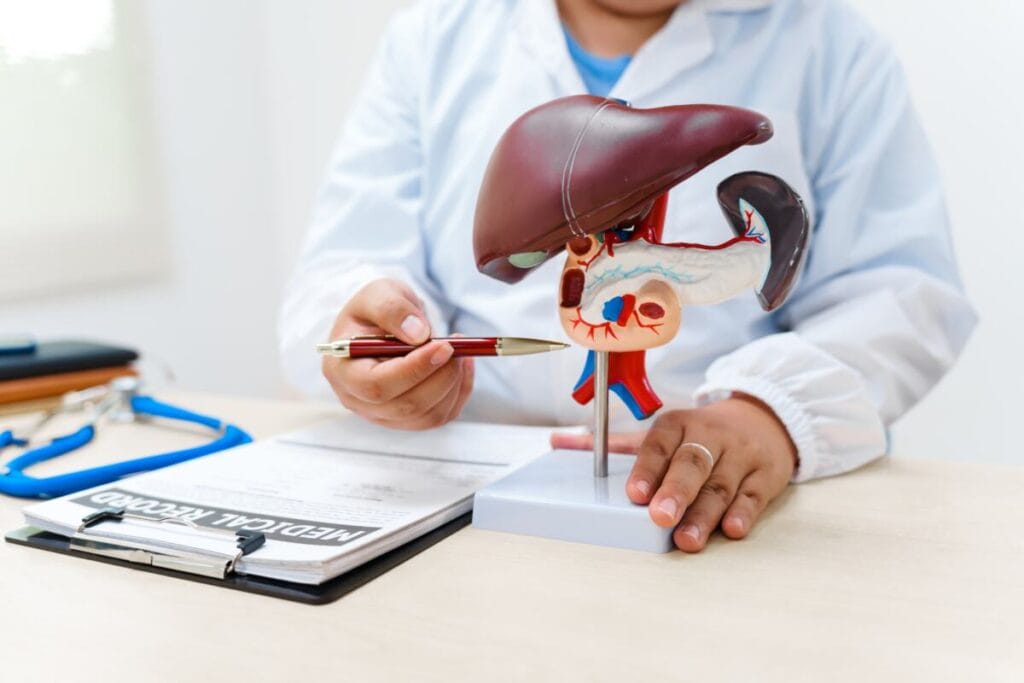
The liver is the "silent" laboratory of the human body. It performs over 500 functions: it neutralizes toxins, regulates glucose levels, synthesizes proteins, bile, hormones. But at the same time, it is practically painless, even when it already has serious damage. That is why laboratory testing of the liver is one of the most reliable ways to prevent complications. Main markers of liver function A liver test usually includes a whole set of indicators, known as "liver tests". They cannot be evaluated in isolation - it is important to consider the entire context: ALT (alanine aminotransferase): an enzyme released when liver cells are destroyed. The most sensitive indicator of hepatocellular damage. AST (aspartate aminotransferase): an enzyme also found in the heart and muscles. Its increase together with ALT is a signal of an acute process in the liver. Bilirubin (total, direct, indirect): a pigment formed when red blood cells break down. Its high level is a sign of impaired bile flow or liver failure. GGT (gamma-glutamyltransferase): increases with alcohol abuse...

Autosomal disease test: what a DNA test will show and why it is important even before symptoms appear
What are autosomal diseases? Autosomal diseases are hereditary disorders caused by mutations in genes located on non-sex (autosomal) chromosomes. There are 22 pairs of autosomes in the human genome. If one or both copies of a particular gene have an error, disorders can occur that manifest immediately after birth or even in adulthood. There are two main types of autosomal inheritance: Autosomal dominant: one defective copy of a gene is enough for a disease to occur (e.g., Huntington's chorea, Marfan syndrome) Autosomal recessive: a person must be a carrier of two copies of a mutated gene for the disease to manifest (e.g., cystic fibrosis, spinal muscular atrophy, phenylketonuria) Why is a test for autosomal diseases performed? Such a test not only allows you to confirm the diagnosis, but also: detect carrier status in a clinically healthy person assess the risk of transmitting the disease to children perform prenatal diagnosis or embryo testing during IVF build a surveillance or treatment strategy This test is especially important for families where there are cases of rare diseases, for young couples...

The impact of stress on the heart: the story of one pressure
«I’m 38, my heart is healthy, but something is wrong» Alexey, a middle manager. All my life without diagnoses, without sick leave. But a few months ago he began to notice: the heart «accelerates» for no reason, the pressure jumps at night, he wakes up with heaviness in the chest. Examinations did not show a heart attack, the vessels are clean. The therapist advised him to see a psychotherapist. But Alexey felt: it’s not just his head — something is really happening in the body. Cardiologist: «This is what a stress cardioreaction looks like» When a patient complains of chest pain, and angiography is normal, I think of autonomic dysfunction, transient ischemia, or stress-induced cardiomyopathy. The heart can work without organic disorders, but react to excess cortisol, adrenaline, and hypersympathetic activation. What exactly happens in the heart during stress? Vasoconstriction → increased blood pressure Increased heart rate → tachycardia, arrhythmia Release of glucose and fats into the blood → accelerated vascular aging Decreased sensitivity to insulin → metabolic...

Allergy tests in adults: what you need to know and how to choose the right method
Allergies can appear unexpectedly - in adulthood, even without previous episodes in childhood. Often, symptoms - from a runny nose to chronic fatigue - are not immediately associated with an allergic reaction. In such cases, accurate diagnosis plays a key role. Let's consider what testing methods are available today and how to understand what exactly causes the body's negative reaction. When to take allergy tests Allergy is suspected when a person has the following conditions: recurring rash, itching for no apparent reason swelling of the eyelids or lips after eating certain foods seasonal nasal congestion, sneezing or coughing reactions after contact with animals or household chemicals intolerance to certain medications In such cases, testing helps not only to confirm an allergy, but also to identify specific substances that cause it. Available testing methods in adults Laboratory methods (blood test) Analysis for specific IgE antibodies allows you to detect a reaction to specific allergens. This method is suitable for patients with...

Excess vitamins: when something useful becomes dangerous
In the pursuit of health, we often forget that excessive consumption of even the most useful substances can be harmful. Vitamins are vital compounds, but their excess, especially with uncontrolled intake of supplements, can cause toxic reactions and serious consequences for the body. Which vitamins most often accumulate in the body Fat-soluble vitamins (A, D, E, K) are stored in adipose tissue and the liver, so over time they can accumulate in dangerous concentrations. Vitamin A (retinol) - excess causes headaches, nausea, skin irritation, in pregnant women - the risk of pathologies in the fetus. Vitamin D - hypervitaminosis can cause calcification of blood vessels, heart and kidney dysfunction. Vitamin E - in large doses affects blood clotting, can increase the risk of stroke. Vitamin K - rarely causes toxicity, but excess can contribute to blood thickening while taking anticoagulants. Water-soluble vitamins are less dangerous, but not safe. Although excess B vitamins and vitamin C are usually excreted from the body,...

Melanoma diagnosis: how to recognize the most dangerous skin cancer in time
An ordinary mole that has slightly changed color or shape rarely causes alarm. But it is such changes that sometimes become the first signal of a dangerous disease - melanoma. This aggressive type of skin cancer can quickly spread to the lymph nodes, lungs, liver or brain. However, if melanoma is diagnosed at an early stage, it is completely cured in most cases. Therefore, timely diagnosis is not just a guarantee of success, but the key to saving life. What is melanoma and why is it dangerous Melanoma is a malignant tumor that arises from melanocytes - cells that produce the pigment melanin. Most often it develops on the skin, but can also occur on the mucous membranes, in the retina of the eye, under the nails. A feature of melanoma is its high metastatic activity. It can spread very quickly even with a small size of the primary lesion. Because of this, early detection is critically important for successful treatment. Basic methods of diagnosing melanoma Clinical examination and rule...

Blood test for STI antibodies: accurate diagnosis of hidden infections
Sexually transmitted infections (STIs) can often be asymptomatic, especially in the early stages. That is why laboratory diagnostics, in particular a blood test for antibodies, is an important tool for detecting infections even when there are no complaints. This study helps to start treatment on time, avoid complications and reduce the risk of transmitting the infection to a partner. What are antibodies and why are they looked for in the blood Antibodies are proteins produced by the immune system in response to the penetration of an infectious agent, in particular STI pathogens. Their presence in the blood indicates contact with a virus or bacterium: IgM appear in the early stages of infection, signaling an active phase. IgG are long-term memory antibodies that indicate a past or chronic infection. Which STIs are diagnosed through antibodies A blood test for antibodies can detect a number of common infections: HIV (type 1 and 2) - IgG, IgM Syphilis (Treponema pallidum) - antibodies to treponema (TPHA, RPR,...

Pap test: a key test for early detection of cervical cancer
What is a Pap test? The Pap test, or Papanicolaou smear, is a cytological examination of cervical cells that allows the detection of precancerous changes or early stages of cancer. Its name comes from the name of the Greek doctor Georgios Papanicolaou, who developed the method in the 1940s. The analysis is one of the most effective cervical cancer screening tools, recommended by the WHO and national health programs in many countries. Who and when does a Pap test need to be done? It is recommended to have a Pap test: for women aged 21 to 65 every 3 years (or every 5 years if combined with an HPV test) regardless of the presence of symptoms or sexual activity (except for those under 21 years of age). The test is especially important for women who have: early onset of sexual life multiple sexual partners smoking or immunodeficiency conditions in history - HPV or cervical dysplasia How is the procedure done? A Pap test is a quick and painless procedure: A doctor or nurse...

Intestinal candidiasis test: when to pay attention
Chronic fatigue, bloating after each meal, frequent allergic reactions, even without an obvious allergen - all these can be signals from the body about a violation of the microbiome, namely - an overgrowth of fungi of the genus Candida in the intestines. One way to confirm or rule out such a problem is to take a test for intestinal candidiasis. How it is performed, when it is worth taking it and what research methods are available - we will consider further. What is intestinal candidiasis? Intestinal candidiasis is a violation of the balance of microflora, in which the fungi Candida albicans (or other species) begin to actively multiply and displace beneficial bacteria. This is not an acute infection, but rather a chronic disorder, often accompanied by imperceptible but debilitating symptoms: bloating, gas formation; unstable stool (constipation/diarrhea); constant fatigue, clouded thinking ("fog in the head"); food intolerances; predisposition to fungal lesions of the skin and mucous membranes; cravings for sweets and carbohydrates. What tests are there? There are several ways to detect...
