
How to prepare a child for blood sampling to avoid injury
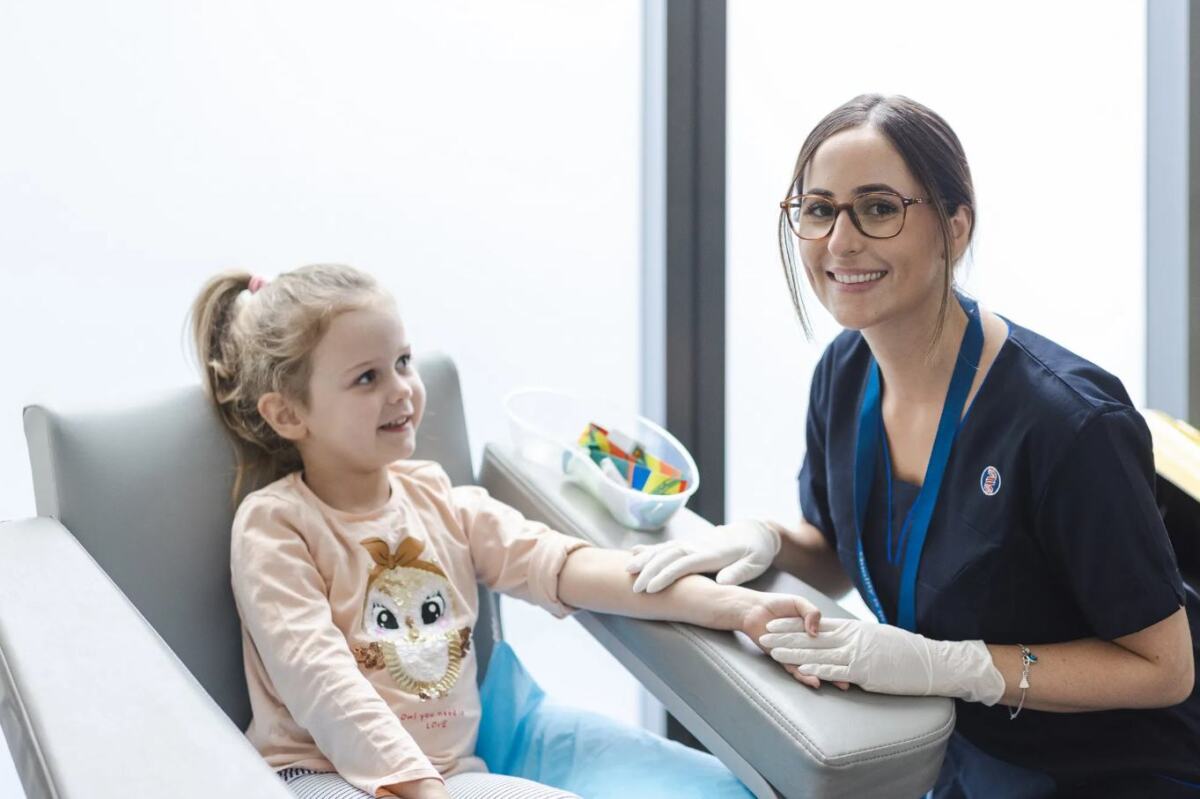
For a child, having a blood draw is often scary, not just because of the injection itself, but because of the unknown, the anticipation, and the feeling of losing control. Good preparation doesn't make the procedure "pleasant," but it does reduce fear, tension, and the risk that the experience will be remembered as very traumatic. That's why preparing your child for blood test better in advance, not at the last minute.
Don't start with the phrase "don't be afraid", but with an honest explanation.
A calm and honest conversation works best. It is important for the child to know that it will be a short injection, that it will not last long and that you will be there. Children's health services advise explaining in advance what will happen, telling the truth, not scaring and at the same time not deceiving with phrases like "it will not hurt at all" if it is not so. When the child understands that he is not being misled, the level of trust in the adult increases.
It is also easier for children when they understand why the test is needed at all. The explanation should be very simple: “the doctor wants to check how your body works”, “this will help to understand why you are sick”, “this is necessary to choose the right treatment”. When a child has a sense of the procedure, he or she will tolerate the injection itself better.
Don't leave the conversation at the office door.
Many parents think it is better to say about analysis already before at the entrance itself, “so that the child does not get too excited”. In fact, it often works the other way around: surprise increases anxiety and distrust. It is better to prepare the child in advance, but taking into account their age. For a toddler, a brief explanation the day before is enough, and for an older child, you can talk in a few days and give yourself time to get used to the idea of the procedure.
For children 1–3 years old, it is usually advised to speak very simply and briefly, without unnecessary details. Preschoolers can use games: you can “take blood” from a teddy bear, play a trip to the laboratory, let the child be a doctor. For schoolchildren, it is already useful to explain the stages of the procedure and together choose the way in which they will cope with fear.
Don't pass on your own fear to your child.
One of the strongest factors is the state of the adult himself. If mom or dad is very tense, the child almost always feels it. The recommendations for parents directly state: when the adult looks calm and confident, it is easier for the child to stay calm too. This does not mean that you should pretend to be indifferent, but it is better not to share with the child your own scary stories about injections, bad veins or “I am afraid of this myself”.
Another important thing is not to apologize for the procedure itself and not to use shame or threats. Phrases like “just don’t cry,” “don’t embarrass me,” “if you scream, you won’t get anything” usually don’t help. Other things work much better: “I know you’re scared,” “I’ll be there,” “we’ll get through this together.” This style of conversation reduces tension, not increases it.
Give your child some control.
When a child can make their own choices, the procedure is easier to tolerate. This does not mean that they decide whether the test will be done at all, but they can choose small things: which toy to take, which video to watch, which hand is more comfortable for them, whether to sit or lie down, whether to look or look away. For younger children, a realistic choice of two options often works very well.
It is useful to make a small “courage plan” at home: what the child will do at the moment of the injection. For example, count to ten, blow out an imaginary candle, watch a cartoon, squeeze your hand or hug a toy. When the plan is ready in advance, the situation no longer seems so out of control.
Prepare not only your words, but also your body
It is important for the child not to be dehydrated on the day of the blood draw. Hospital guidelines for children advise parents to feed their child well before the visit, unless there is a specific requirement to donate. fasting blood test, because it makes it easier for the healthcare provider to find the vein. It is also advised to keep your hands warm, especially in cold weather: warm hands and forearms can also make it easier to draw blood.
Find out in advance whether special preparation is required for this particular test. If the test needs to be taken on an empty stomach, it is better to explain this to the child simply and without dramatization. If an empty stomach is not required, do not take the child to the procedure hungry “just in case” — hunger and fatigue only increase tears and resistance.
Bring things with you that help you calm down.
It’s helpful to bring a favorite toy, blanket, water bottle, book, fidget toy, or headphones. Children’s clinics specifically recommend bringing distractions and comfort items—it really works. For children who are sensitive to noise or crowds, headphones or earplugs can help.
For infants and very young children, a familiar voice, touch, rocking, a song, “cuckoo,” or breastfeeding after the stressful part of the visit work well. For older children, a cartoon on the phone, music, a game on a tablet, bubbles, imaginary stories, or rhythmic breathing with a parent work well.
Pain relief is not a fad, but normal care
If your child is very afraid of injections or has already had a difficult experience, it is worth asking in advance about pain-relieving cream. Such products are often recommended in children's hospitals: they can reduce pain and, over time, even reduce the fear of needles. It is only important to remember that the cream must be applied in advance, because it takes time to take effect - often about 30 minutes.
The cream alone doesn't solve everything, but when combined with distraction and calm support, it gives a much better result than the "just bear with it, it's a small thing" approach. If you plan to use such a remedy, it's better to clarify the rules in laboratories or to the doctor before the day of the analysis.
How to hold your baby properly during the procedure
For young children, the best position is often on the parent's lap in a tight but secure embrace. This helps to both calm the child and prevent them from jerking their arm when the blood is drawn. Hospital guidelines describe this approach: the child sits on the parent's lap, with an adult helping to keep them in a calm position.
At the same time, there is an important rule: you should not “forcefully knock down” a child or press hard if they are in a panic. Comfortable restraint and violent restraint are not the same thing. When there is strong resistance, it is better to immediately tell the staff about it and together look for a more gentle option, rather than trying to “break” the child by force.
What to do after blood collection
After the procedure, a child really needs not lecturing, but a restored sense of security. Hugs, water, a calm tone, and brief praise for a specific action work best: “you held on,” “you breathed well,” “you were able to hold your hand calmly.” It’s not necessary to make a “big prize,” but a small ritual after the analysis — a sticker, a walk, a book, a favorite snack — can help solidify the feeling that a difficult moment ended safely.
Even if the child cried, the procedure is not considered a “failure.” The goal is not to prevent the child from crying at all, but to prevent them from feeling cheated, abandoned, or broken by the situation. If you calmly say after the analysis, “yes, it was unpleasant, but we got through it,” this works better than shaming them for their tears.
When extra help is needed
If your child has a very strong fear of needles, runs away from the office, panics long before the visit, or has autism, developmental delays, or a previous difficult experience, it is worth mentioning this at the time of the appointment. Some children's hospitals may be able to connect a play support specialist or help organize a gentler visit. When anxiety is too strong, additional support can be much more helpful than trying to "it will pass on its own.".

Frequently asked questions
When is it best to talk to a child about blood sampling?
A brief explanation the day before or on the day of the visit is usually enough for a toddler, but it's better to tell an older child a little earlier so they have time to get used to the idea of the procedure. It's not a good idea to tell them at the very last minute.
Can you promise that there will be no pain?
It's better not to promise something that the child might feel differently. It's more honest to say that there will be a short injection or "pinch," but it will be over quickly, and you will be there.
Does distraction really help?
Yes. Music, videos, books, bubbles, deep breathing, a toy in your hands — all of these can significantly reduce tension and pain during the procedure.
What to bring to the laboratory?
The best things are water, a favorite toy or blanket, a book or a phone with a cartoon, and for children with sensory sensitivity, headphones or a familiar calming object.
Do I need painkiller cream?
Not for everyone, but for children with severe fear or bad previous experiences, it can be very useful. It is only important to know in advance how and when to apply it.
The main thing in preparing for a blood draw is not to pretend that “nothing will happen,” but to give the child honesty, support, and the feeling that they are not alone. This is what best reduces fear and helps them go through the procedure without unnecessary trauma.
Recommended diagnostic programs
Choose the necessary tests with a guarantee of accurate laboratory results.

Director of Medi Lab Plus LLC, a doctor of the highest category. Has over 45 years of practical experience in medicine and laboratory diagnostics. Founder and head of the laboratory since 2007. More details…

