
Elevated TSH and what this analysis result means
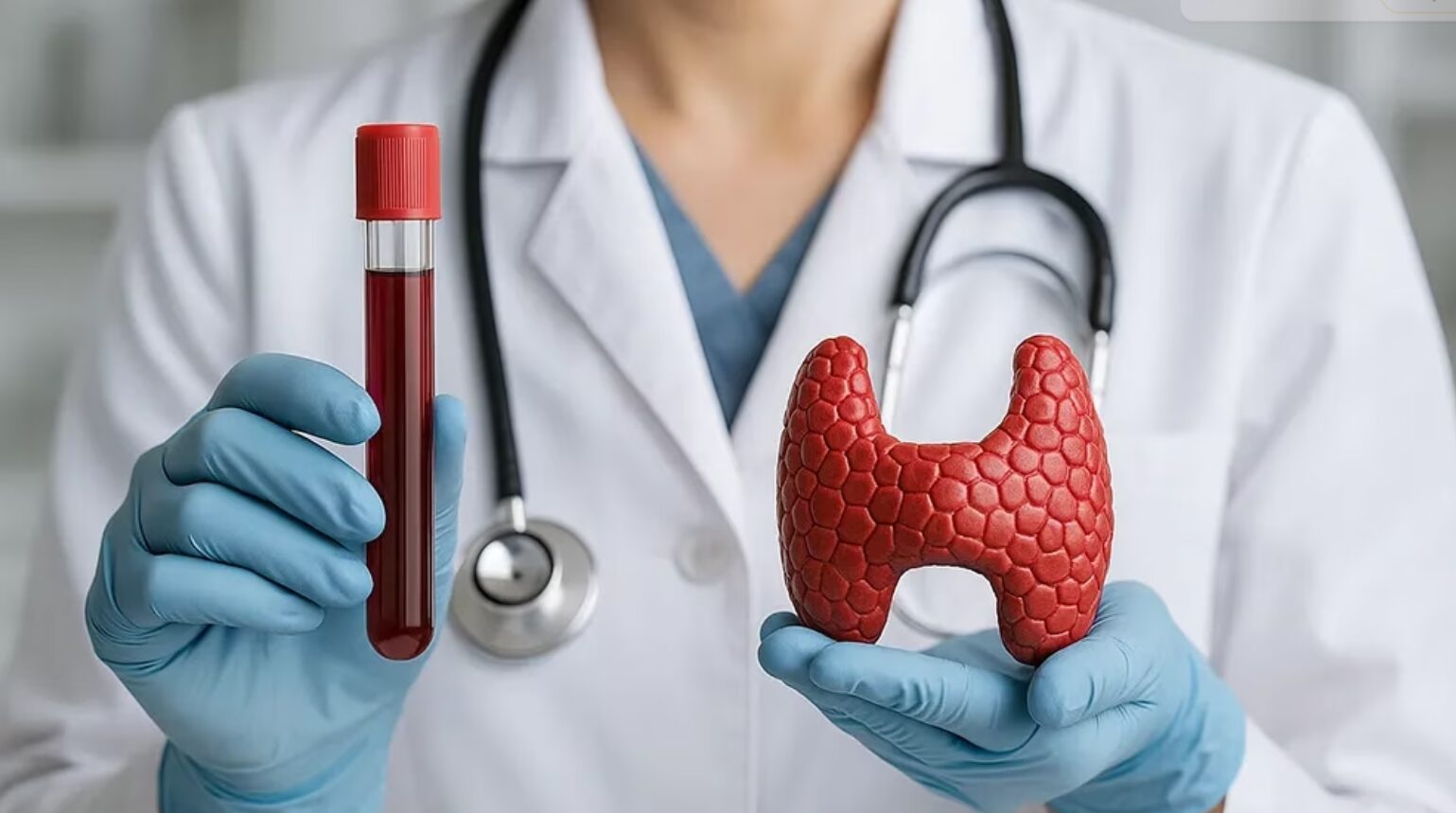
Anyone who has experienced an elevated TSH level is familiar with this question: what does this number mean? The test is often ordered for fatigue, chills, hair loss, or as part of a preventive examination, and when the result is outside the normal range, the first thought usually boils down to three points: is it hypothyroidism, does treatment need to be done, or can I just check again later.
TSH, or thyroid-stimulating hormone, is not a product of the thyroid gland, but a signal from the pituitary gland that regulates its function. As the American Thyroid Association notes, TSH is the primary screening test for thyroid function, and elevated levels usually indicate insufficient thyroid hormone production.
However, high TSH is not a diagnosis, but a laboratory guideline. To correctly decipher it, you need to take into account not only the number itself, but also the level of free T4, clinical symptoms, concomitant diseases, medication, age, pregnancy, and the presence of thyroid antibodies.
What exactly does TSH show?
TSH acts as a signal to the thyroid gland. When the body doesn't have enough thyroid hormones, the pituitary gland increases stimulation and TSH increases. When there is too much hormone, TSH usually decreases.
Therefore, an elevated TSH often prompts a doctor to check for hypothyroidism. MedlinePlus notes that a high TSH result is most often associated with an underactive thyroid gland.
However, the body does not always behave according to the ideal scheme. TSH may be slightly elevated temporarily, may change after an illness, on the background of medication or due to the peculiarities of taking a hormonal drug, if a person is already being treated. That is why it is better not to interpret one result without a doctor.
First landmark
The most important thing after an elevated TSH is to look at the free T4. This indicator helps to understand whether the body is getting enough thyroid hormone.
The Mayo Clinic explains that the combination of high TSH and low T4 is consistent with hypothyroidism. If TSH is high but T4 and T3 are within the normal range, this may indicate subclinical hypothyroidism.
| Result in the form | What could this mean? | Why a doctor's evaluation is needed |
|---|---|---|
| TSH is elevated and free T4 is decreased | Probable overt hypothyroidism | It is necessary to determine the cause and treatment tactics |
| TSH is elevated and free T4 is normal | Possible subclinical hypothyroidism | Important symptoms, antibodies, age, pregnancy and dynamics |
| TSH slightly above normal without symptoms | Possible temporary or borderline deviation | Frequent re-inspection is required |
| TSH is elevated on treatment | Possible missed doses, drug interactions, or underdosing | Only a doctor can adjust the regimen. |
| TSH elevated during pregnancy | Requires separate assessment | Norms and tactics depend on the term and clinical situation. |
NICE recommends measuring free T4 in the same sample if TSH is above the reference range. This helps to more accurately assess thyroid function.
When elevated TSH has symptoms
A slight change in TSH may not cause noticeable symptoms. However, if thyroid function is truly reduced, a person often feels as if their body is working more slowly.
They may be concerned about:
- constant fatigue;
- drowsiness;
- frostbite;
- cold hands and feet;
- dry skin;
- hair loss;
- brittle nails;
- weight gain for no apparent reason;
- constipation;
- puffiness;
- menstrual cycle disorders;
- decreased mood;
- slow heartbeat;
- impaired concentration.
MedlinePlus describes hypothyroidism as a condition in which the thyroid gland does not produce enough hormones, and blood tests for TSH and free T4 are used for diagnosis.
If your symptoms include constant chills or cold extremities, it is worth remembering that the cause is not always solely in the thyroid gland. In the material about, Why are my hands and feet cold? It is explained that similar complaints can also be related to anemia, deficiencies, diabetes or circulation.
Why TSH may increase
Elevated TSH is most often associated with primary hypothyroidism, when the thyroid gland does not produce enough hormones. But there may be different reasons behind the result.
Possible explanations:
- autoimmune thyroiditis;
- consequences of thyroid surgery;
- radioactive iodine treatment;
- radiation therapy in the neck area;
- temporary impairment after thyroiditis;
- insufficient dose of levothyroxine;
- irregular intake of the drug;
- taking levothyroxine with food, calcium, or iron;
- the effects of certain medications;
- the period after a serious illness;
- pregnancy or postpartum changes;
- laboratory factors.
Therefore, the doctor usually does not limit himself to TSH alone. He looks at whether there is a clinical picture, whether the deviation shown by free T4 is repeated, and whether there are signs of an autoimmune process.
When are antibodies needed?
If TSH is repeatedly elevated or there are symptoms of hypothyroidism, your doctor may order thyroid antibodies. The most common are antibodies to thyroperoxidase. They help to understand whether your thyroid may be reason to be autoimmune.
MedlinePlus explains that thyroid antibodies can help detect autoimmune thyroid diseases, including Hashimoto's disease, which can cause hypothyroidism.
Antibodies may be appropriate if:
- TSH is elevated in the repeat analysis;
- there are symptoms of hypothyroidism;
- free T4 at the lower limit or reduced;
- there is an enlargement of the thyroid gland;
- there were autoimmune diseases in the family;
- have other autoimmune conditions;
- a woman is planning a pregnancy;
- The risk of progression to subclinical hypothyroidism should be assessed.
Positive antibodies do not always mean immediate treatment. They indicate the possible nature of the process, and the decision depends on the whole picture.

What tests may be needed after an elevated TSH?
After an elevated TSH, you don't automatically need to take dozens of tests. But there are basic tests that help clarify the situation.
The doctor may recommend:
- free T4;
- repeated TSH;
- antibodies to thyroperoxidase;
- antibodies to thyroglobulin according to indications;
- complete blood count;
- ferritin;
- vitamin B12;
- glucose or glycated hemoglobin as needed;
- lipid profile;
- Ultrasound of the thyroid gland according to indications.
If there is fatigue, hair loss, weakness or chills, the cause may be mixed. For example, a person may have both borderline TSH and iron deficiency. That is why it is sometimes advisable not only to check the thyroid gland, but also to assess the general condition of the blood and the reserves of important substances.
The basic logic of the check can also be compared to the material on thyroid test, which discusses situations where fatigue or weakness may be associated with hormonal disorders.
When should you retake the test?
A repeat test may be useful if your TSH is only slightly elevated, your symptoms are vague, or your results don't match your symptoms. This doesn't mean the first test was wrong. Sometimes your doctor needs to see what's going on.
The test may be repeated if:
- TSH is slightly above normal;
- free T4 is normal;
- no complaints;
- recently had an acute illness;
- the medication regimen has changed;
- the person is taking biotin or other supplements;
- the result was obtained for the first time;
- It is necessary to evaluate the effect of treatment.
The American Thyroid Association notes that biotin may interfere with the measurement of some thyroid tests, so it is worth noting the supplements to your doctor or laboratory.
A separate situation if a person is already taking levothyroxine
In a patient already being treated for hypothyroidism, an elevated TSH may mean that the body is not getting enough hormone. But the cause is not always the dosage.
TSH may remain elevated due to:
- skipping pills;
- taking the drug not on an empty stomach;
- simultaneous administration with iron or calcium;
- interaction with other medications;
- change in body weight;
- pregnancy;
- malabsorption;
- Incorrect interval between dose change and analysis control.
The Mayo Clinic notes that when treating hypothyroidism, TSH levels help your doctor determine the correct dosage of medication.
Do not increase your dose on your own. Too much thyroid hormone can cause palpitations, anxiety, tremors, insomnia, weight loss, and additional risks to your heart and bones.
Elevated TSH during pregnancy
During pregnancy or planning a pregnancy, elevated TSH requires separate evaluation. During this period, the need for thyroid hormones may change, and the doctor interprets the results taking into account the gestational age, free T4, antibodies, and clinical situation.
Importantly:
- do not compare the result with other people's standards;
- do not start iodine or hormones on your own;
- check free T4;
- inform the doctor about pregnancy or planning;
- agree on further monitoring with an obstetrician-gynecologist or endocrinologist.
In pregnant women, even moderate changes in indicators should be discussed quickly, because thyroid hormones are important for the course of pregnancy and fetal development.
When it is better not to postpone a consultation
Elevated TSH often does not require emergency care, but there are situations when it is better not to wait for months.
See a doctor as soon as possible if you have:
- low free T4;
- pronounced weakness;
- severe drowsiness;
- significant frost;
- puffiness;
- dyspnea;
- slow heartbeat;
- rapid weight gain;
- menstrual cycle disorders;
- infertility or pregnancy planning;
- pregnancy;
- thyroid enlargement;
- high TSH in repeated analysis;
- symptoms in a child or teenager.
If the result is found by chance and you feel normal, this is not a reason to panic. But it is a reason to complete the evaluation: check free T4, antibodies if necessary, and determine with your doctor whether treatment, observation, or re-checking is necessary.
What not to do after such a result
Elevated TSH often prompts people to make independent decisions. A person starts taking iodine, selenium, hormonal drugs, or changes the dose of medications based on advice from the Internet. This approach is dangerous, because the cause of the increase can be different.
It is not worth it:
- start levothyroxine without a prescription;
- change the dose of an already prescribed drug;
- take iodine without indications;
- interpret TSH without free T4;
- ignore pregnancy or planning;
- draw a conclusion based on only one analysis;
- explain all symptoms only by the thyroid gland;
- postpone a repeat check-up if the doctor recommended it.
Elevated TSH — This is not a diagnosis, but an important laboratory signal that needs to be interpreted correctly. The number itself does not tell the whole story: the doctor evaluates it together with free T4, symptoms, antibodies, age, pregnancy, concomitant diseases and medication. In some cases, this is a reason to start treatment, in others - just observation or repeated control, and sometimes - a search for another cause of similar complaints. The main thing is not to jump to conclusions, not to start taking hormones or supplements on your own, and to trust the doctor's comprehensive assessment. Then the result ceases to be an alarming number and becomes a clear guideline for further actions.

Director of Medi Lab Plus LLC, a doctor of the highest category. Has over 45 years of practical experience in medicine and laboratory diagnostics. Founder and head of the laboratory since 2007. More details…

