
Ticks: how to protect yourself, what to do after a bite and when tests are needed
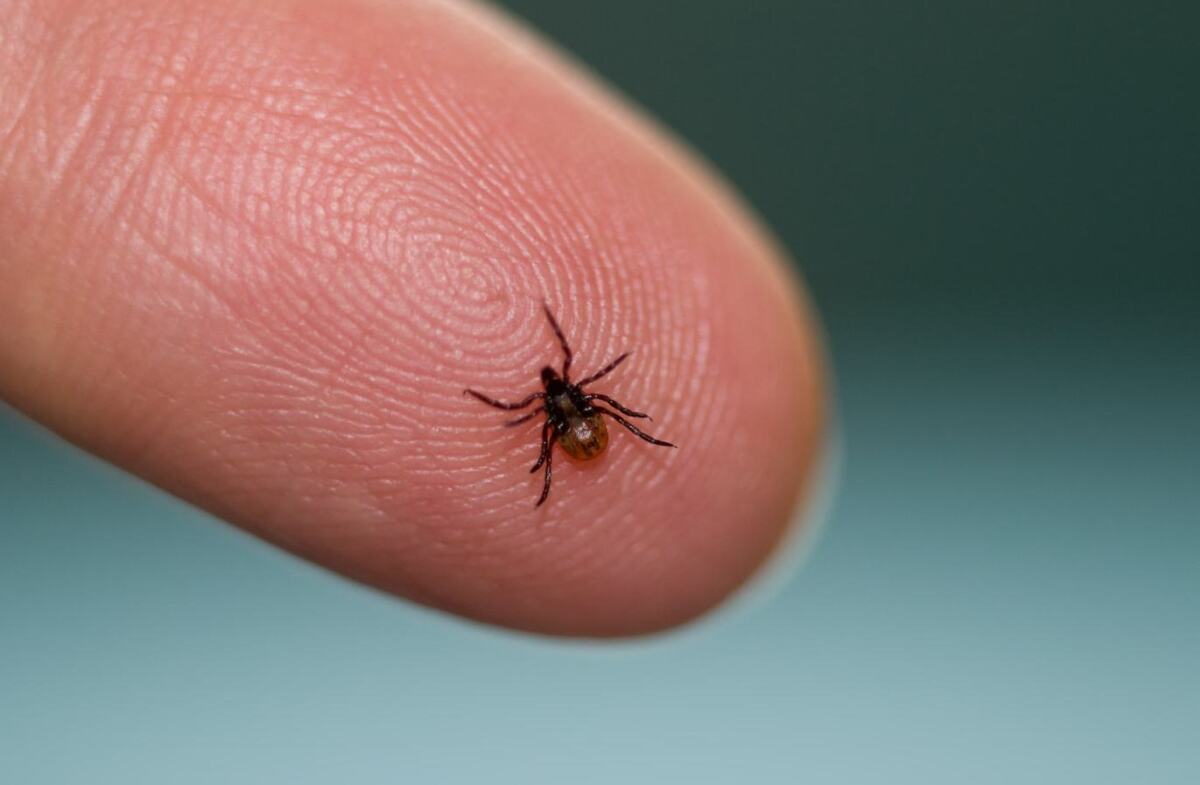
It has already begun in Ukraine tick season. The Public Health Center reports that these parasites are especially active in the spring. Ticks do not fly or fall from trees - they wait for a person in the grass and on bushes, usually no higher than a meter from the ground. That is why you can pick up a tick not only in the forest, but also in a park, square, garden, at the dacha or even near the house.
The main danger of ticks is that they can transmit infections. Most often, people mention Lyme disease, but another important thing: not every bite means infection. After a bite, you need to act calmly and correctly - quickly remove the tick, treat the bite site and monitor your well-being for several weeks. This tactic reduces risks better than folk methods or self-medication.
Where can you most often find ticks?
The highest risk is in tall grass, bushes, on the sides of paths, in forest parks, urban green areas and gardens. The tick does not attach instantly: it can crawl on clothes or skin for some time, looking for a convenient place. Therefore, periodic inspection during a walk really makes sense, and after returning home it is worth checking the body, clothes, hair, children and pets again.
Table: What to do if it's tick season
Below is a quick guide to what to do before, after, and after a bite. The recommendations are consistent with advice from the Centers for Disease Control and Prevention, CDC, and NHS.
| Situation | What to do | What not to do |
|---|---|---|
| Going to the park, forest or country house | Wear light, closed clothing, tuck your pants into your socks, use insect repellent, and stay in the center of the trail. | Don't go into tall grass wearing revealing clothing. |
| Returned from a walk | Inspect body, hair, skin folds, children, pets, wash or shake out clothes | Don't put off the review until later. |
| Saw a tick on the skin | Remove it as soon as possible with fine tweezers or a special tool | Do not squeeze the tick with your fingers. |
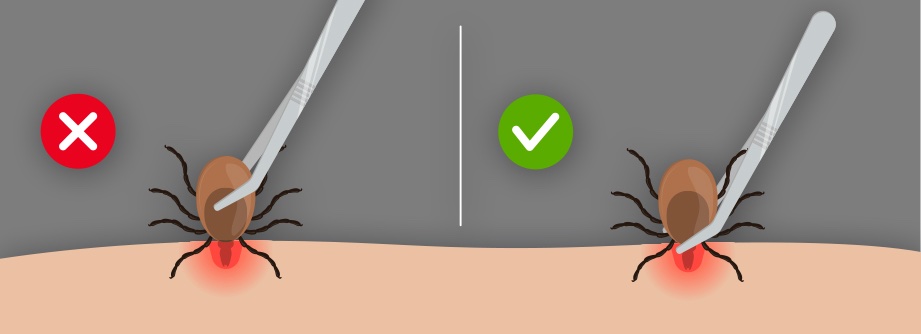
| Removing a tick | Grab as close to the skin as possible and pull straight up without jerking. | Do not twist, do not pull, do not crush |
| After the bite | Treat the area with antiseptic, wash your hands, and monitor symptoms for several weeks. | Do not fill the tick with oil, alcohol, cream, or varnish. |
| Thinking about tests? | Follow your symptoms and doctor's recommendations; early tests for Lyme disease can be false negative. | Do not draw conclusions based only on the first analysis or by analyzing the tick itself |
How to protect yourself from ticks while walking
The simplest prevention rules really work. Before going out into the green zone, you should apply repellent to your clothes or exposed skin, choose closed shoes, long sleeves, and light-colored clothing on which ticks are easier to spot. It is better to tuck your pants into your socks, and cover your head and neck. When walking, it is advisable to stay closer to the center of the trail and avoid going into bushes and tall grass.
Another simple but important tip is to check yourself not only at home, but also during outdoor activities. This is especially true for children and people who spend a lot of time on the grass. Ticks often go unnoticed because the bite does not always hurt. That is why a careful inspection after a walk is one of the most effective ways to prevent the consequences of a bite.
What not to do after a tick bite
After a bite, do not squeeze the tick, pull it out abruptly, cauterize it, cover it with oil, alcohol, cream, petroleum jelly, or nail polish. These actions do not help, and on the contrary, they can make removal more difficult or increase the risk of infected contents getting into the wound. Also, do not crush the tick with your fingers after you have removed it.
This is one of the most common myths surrounding tick bites: many people still think that the parasite should be «smothered» with oil or made to fall off. In fact, there is no need to wait — the tick should be removed as soon as possible. The CDC specifically emphasizes that it is not worth delaying removal to get to a doctor if the tick has already attached.
How to properly remove a tick
The best option is to see a doctor. But if this is not possible, you should remove the tick yourself as soon as possible. Fine-tipped tweezers or a special tick removal device will do. Grasp the tick as close to the skin as possible, without squeezing its body, and slowly pull it upwards in a smooth motion. Do not pull or twist it sharply. If part of the mouthparts remains in the skin, it can be carefully removed with a sterile instrument; if this is not possible easily, it is better not to injure the skin further. After removal, the bite site should be treated with an antiseptic, and hands should be washed with soap.
A removed tick should not be crushed. It can be placed in a tightly sealed container, wrapped in tape, destroyed in alcohol, or flushed down the toilet. In Ukraine, the tick can also be submitted for analysis to the Centers for Disease Control and Prevention, but it is important to understand that such a result should not be the only basis for treatment or reassurance. The CDC does not recommend making treatment decisions based solely on testing the tick itself, because a positive result does not mean that infection has already occurred, and a negative result does not guarantee that another bite has not occurred.
When are tests needed after a bite?
This is one of the most common search queries: should you get tested immediately after a tick bite? The answer is usually no. Lyme disease tests detect antibodies, and they do not appear immediately. The CDC notes that in the first weeks after infection, the results can be false negative, and the sensitivity of the tests increases significantly after 4–6 weeks. The NHS also emphasizes that early tests are not always accurate. Therefore, immediately after a bite, it is most important not to "give everything away", but to remove the tick correctly and monitor for symptoms.
If you develop a ring-shaped rash, fever, weakness, headache, or muscle or joint pain, it's a good idea to see a doctor. A typical early sign of Lyme disease may be a circular or "target" rash, which usually appears within 1 to 4 weeks, although sometimes later. It's important to note that not everyone gets the rash, so you should also consider your overall health.
When to see a doctor without delay
Seek medical attention if you develop a rash, fever, joint pain, severe weakness, or other flu-like symptoms after a tick bite. You should also seek medical attention if you are unable to remove the tick properly, if the bite site is severely inflamed, or if your symptoms worsen over the next few days or weeks. Early treatment Lyme disease much more effective than delayed.
The best way to get through tick season calmly is not to rely on myths, but to have a clear algorithm of actions. Closed clothing, repellent, examination after a walk, proper tick removal and attention to symptoms are much more beneficial than panicking after each bite. And if suspicious signs appear, do not postpone consultation: in such situations, timely consultation with a doctor is more important than any home experiments.

Director of Medi Lab Plus LLC, a doctor of the highest category. Has over 45 years of practical experience in medicine and laboratory diagnostics. Founder and head of the laboratory since 2007. More details…

