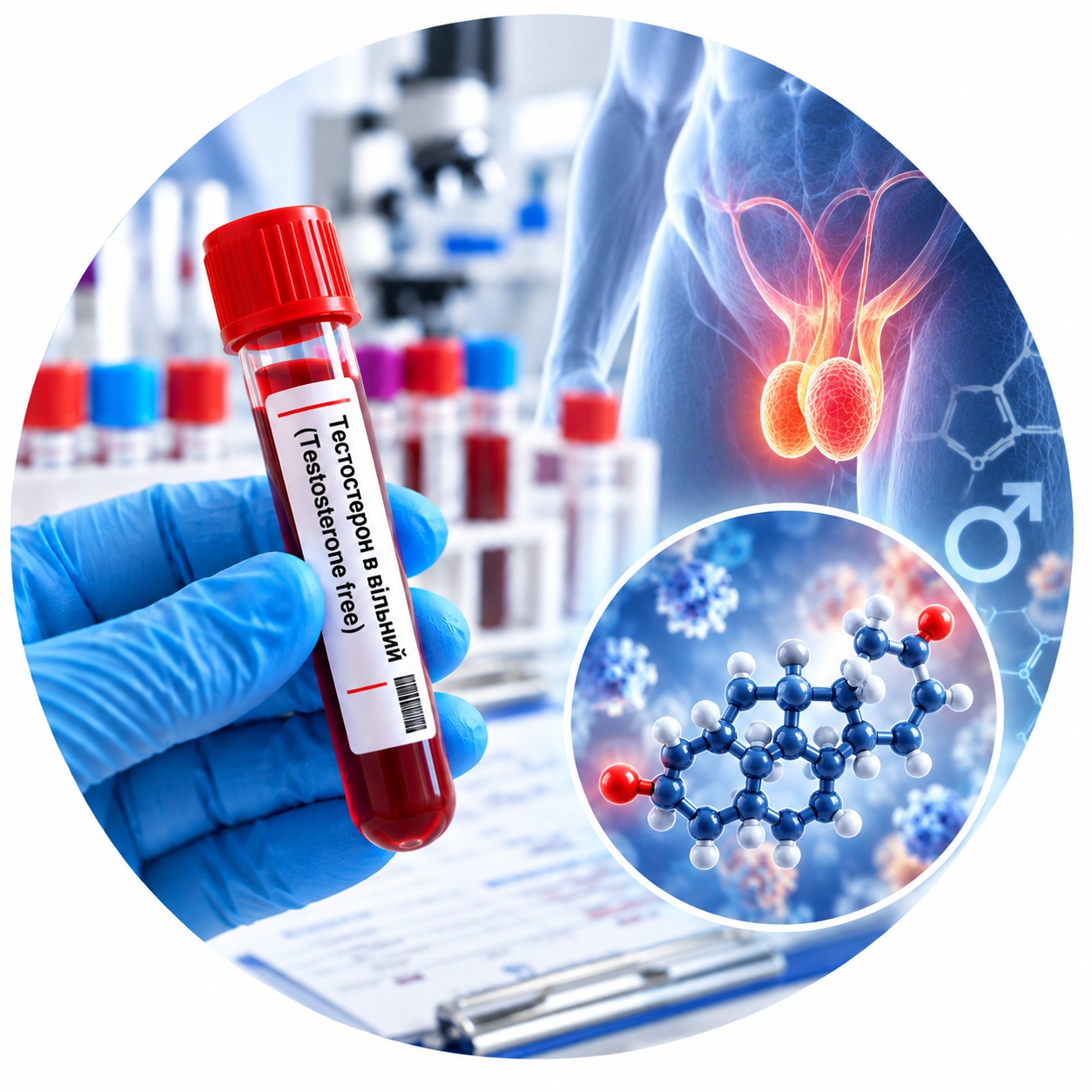


Testosterone free
370 UAH
Testosterone free is a blood test that measures the concentration of free testosterone that is not bound to carrier proteins. The test is used to assess hormonal status and to screen for symptoms of possible androgen deficiency or excess in men and women. The result is evaluated taking into account age, gender, symptoms, and other hormonal parameters.
The study of reproductive function and hormonal status is an important component of medical diagnostics, especially for men. One of the key indicators that helps to assess reproductive potential and the general condition of the body is the level of free testosterone. Free testosterone is a form of the hormone that is not bound to proteins in the blood and is available for use by organs and tissues. Diagnosis of the level of free testosterone is included in the hormone panel, which allows you to assess the function of the gonads and general health.
Testosterone: The main male hormone
Testosterone is one of the main sex hormones in men. This hormone is produced by the gonads, mainly the ovaries, and plays an important role in regulating various aspects of male health. It affects sexual function, muscle and bone growth, energy levels, and mood. Testosterone also affects the levels of red blood cells and body fat.
Testosterone Forms: Total and Free
When examining hormonal status, it is important to distinguish between total and free testosterone. Total testosterone includes free testosterone and testosterone that is bound to proteins in the blood (primarily globulins such as albumin and sex hormone binding globulin). Total testosterone may correlate with free testosterone, but not always.
Free testosterone, on the other hand, is the part of the hormone that is not bound to proteins and is available to interact with receptors in organs and tissues. It is more active and an important indicator for assessing the state of reproductive function and the general condition of the body.
Diagnostics of free testosterone levels
Free testosterone levels are diagnosed by taking a blood sample for analysis. This process may seem a bit complicated, but it provides important information about a man's health.
Meaning of the results
The results of a free testosterone test can have important clinical implications. Low free testosterone levels can indicate a variety of medical conditions, such as hypogonadism (ovarian dysfunction), hypopituitarism, or other endocrine problems. High testosterone levels may be associated with an increased risk of developing conditions such as anterior pituitary adenoma or ovarian tumors.
Treatment
If your free testosterone levels are abnormal, your doctor may recommend various treatments. This may include hormone medications, lifestyle changes, or other medical interventions, depending on the cause of the abnormalities.
Conclusion
Studying the level of fluency Testosterone is an important part of the hormonal panel to assess the reproductive function and general condition of the male body. This hormone plays an important role in many aspects of male health, and monitoring its level allows for timely detection and treatment of possible disorders. Recommendations for diagnosis and treatment should be provided by qualified specialists, as they depend on the individual characteristics of the patient and his state of health.
| Execution time | 1 day |
|---|---|
| Type of biomaterial | Venous blood |
Useful tests